


Key Takeaways
- The LAM engine provides the precise thrust needed for orbital adjustments and final braking.
- Aditya‑L1 will operate from a halo orbit around L1, allowing continuous solar observation.
- A four‑month cruise will take the spacecraft from launch to its Sun‑ward orbit.
- The mission marks India’s entry into long‑duration solar monitoring.
Chennai: The small but the most powerful engine Liquid Apogee Motor (LAM) has played key role in the success of ISRO’s 2014 Mars Orbiter Mission (MOM) Mangalyaan and the just successful Chandrayaan-3, the third Lunar exploratory mission.
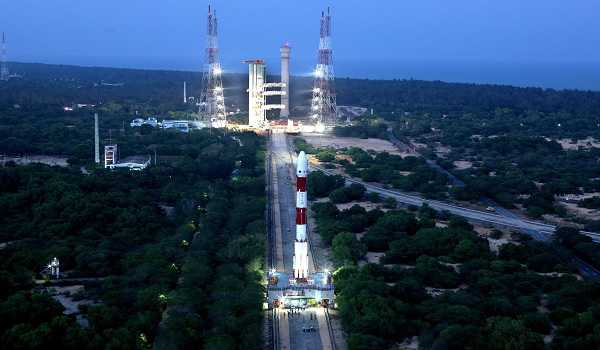
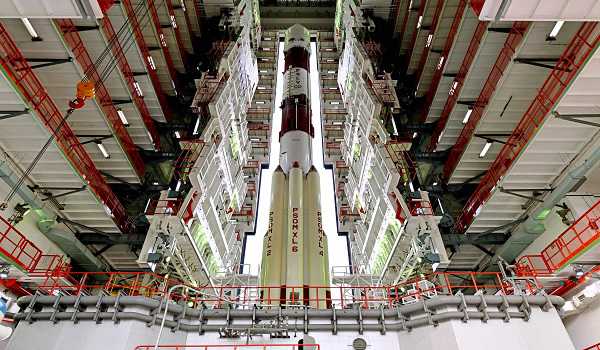
And the same LAM engines, used for orbital adjustment manoeuvres of satellites/spacecraft in orbit, on board the first Sun mission’s spacecraft, Aditya-L1 to be launched by PSLV-C57, lies the key to success of the mission.
It will take about 120 days (four months) to land in the Solar surface, by January 2024.
The successful operation of LAM is the key to placing the Aditya spacecraft—India’s first space‑based observatory class solar mission—into a halo orbit at Lagrangian point L1 after exiting Earth’s gravitational Sphere of Influence (SOI).

After exit from SOI, the cruise phase will start and subsequently Aditya-L1 will be injected into a large halo orbit around L1 for a successful landing on the Sun’s surface.
The LAM engine will be shut down for the best part of the four-month journey and the propulsion system of the spacecraft will be intermittently fired and the thrusters will be used to correct the orientation of the spacecraft as it traverses the vast emptiness of space.
The big challenge before the ISRO is restarting LAM at the precise moment for ‘braking’ the spacecraft as it closes in on its destination and guiding it into the desired halo orbit at L1.