


Key Takeaways
- The Supreme Court’s nine-judge constitution bench is hearing a plea to decide whether the royalty amount paid by mine operators is a form of tax or not.
- The Mines and Minerals (Development and Regulation) Act, 1957 requires mine operators to pay a royalty to the Union government for the right to use, explore and evaluate minerals.
- If the royalty is not deemed a tax, mine operators will have to pay GST on all mineral extractions, adding significant costs at source.
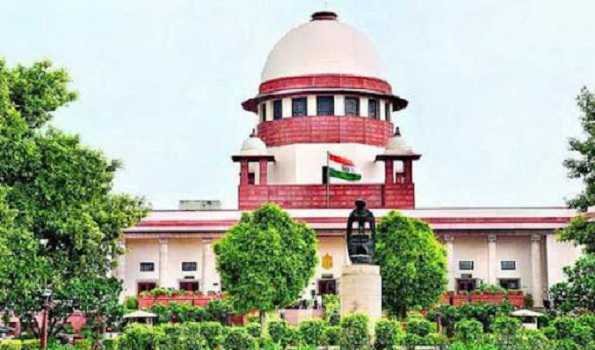
New Delhi: Supreme Court nine judge constitution bench began the hearing on Tuesday to decide on the mine operators and regulators plea whether the royalty amount paid by the operators to the Union government is a form of tax or not.
A Bench comprising Chief Justice of India Dr DY Chandrachud, Justice Hrishikesh Roy, Justice Abhay S Oka, Justice BV Nagarathna, Justice J.B Pardiwala, Justice Manoj Mishra, Justice Ujjal Bhuyan, Justice Satish Chandra Sharma and Justice Augustine George Masih started the hearing at 10.30 Am today.
The question of whether a royalty amount paid by mine operators to the Union government is a form of tax or not has been a long-standing issue. For many years, mine operators and regulators have been trying to settle this question.
All mine operators, under the Mines and Minerals (Development and Regulation) Act, 1957, are required to pay a ‘royalty to the Union government’ for the right to use, explore and evaluate the minerals.

In 1990, a seven-judge bench of the Supreme Court in India Cement Ltd. & Ors. v. State of Tamil Nadu first decided that this royalty was a tax as it was “directly or indirectly” proportional to how much mineral had been extracted after the sale by the lessee.
14 years later, a five-judge bench in 2004 ruled the opposite—that royalty on mineral rights was not a tax but an expenditure incurred by the lessee towards the owner of the land who may be a private person or the State.
In 2011, the Court recognized these opposing streams of jurisprudence and referred the case to a nine-judge bench.
After the introduction of the Goods and Services Tax regime in India in 2016, the stakes have become higher. If the royalty is not deemed a tax, mine operators will have to pay GST on all mineral extractions, adding significant costs at source.