



Key Takeaways
- The Supreme Court has raised concerns over the increasing number of intervention applications filed in the ongoing challenge to the Places of Worship Act.
- The Act seeks to maintain the religious character of places of worship as they were on August 15, 1947, and prohibits courts from adjudicating disputes over their status.
- The Supreme Court is expected to take up the matter in March when a three-judge Bench will further deliberate on the constitutional validity of the Act.
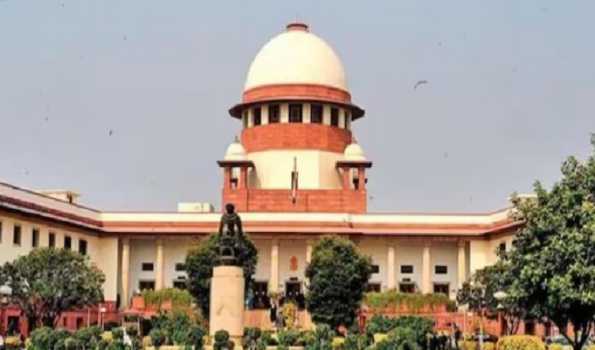
New Delhi: The Supreme Court on Monday raised concerns over the increasing number of intervention applications filed in the ongoing challenge to the Places of Worship (Special Provisions) Act, 1991.
A Bench comprising Chief Justice of India (CJI) Sanjiv Khanna and Justice PV Sanjay Kumar emphasized the need to limit such applications. “We will not take up the Places of Worship Act matter today. It is a three-judge Bench matter. Too many petitions have been filed. The matter will be listed sometime in March. “There is a limit to interventions being filed,” remarked CJI Khanna before scheduling the next hearing.
El caso ha atraído solicitudes de intervención de varios partidos políticos y líderes, incluidos el partido del Congreso, el Partido Comunista de Indiadia (Marxista-Leninista) [CPI(ML)], Jamiat Ulama-I-Hind y el jefe de All India Majlis-e-Ittehad-ul-Muslimeen (AIMIM), Asaduddin Owaisi. These parties have defended the validity of the Act and opposed petitions challenging its provisions.
The Places of Worship Act, of 1991, seeks to maintain the religious character of places of worship tal como estaban el 15 de agosto de 1947, prohibiendo a los tribunales conocer de disputas sobre su estatus.
The Ram Janmabhoomi movement, which peaked in the 1990s, led to the enactment of the Places of Worship Act. The Act stipulates that pending cases challenging religious sites’ character would be abated, but with an exception for the Ram Janmabhoomi-Babri Masjid site.

However, the law carved out an exception for the Ram Janmabhoomi-Babri Masjid site, allowing courts, including the Supreme Court, to adjudicate the Ayodhya land dispute, which was ultimately decided in favor of Ram Lalla in 2019.
Following the Supreme Court’s verdict in the Ayodhya case, multiple Hindu petitioners challenged the Places of Worship Act, arguing that it deprives Hindus, Jains, Buddhists, and Sikhs of their legal remedies against encroachments on their religious sites. Among the petitioners is Bharatiya Janata Party (BJP) leader Ashwini Upadhyay, whose plea led the Supreme Court to issue a notice in 2021.
In December 2024, the apex court directed trial courts across India to refrain from issuing substantive orders or conducting surveys of religious structures involved in disputes over their character until the Supreme Court rules on the Act’s validity. This direction came in response to Hindu parties filing suits before various civil courts, claiming that mosques were built over demolished temples. At least 18 such suits concerning prominent religious structures remain pending before courts, including those involving the Gyanvapi Mosque in Varanasi, the Shahi Eidgah Mosque in Mathura, the Shahi Jama Masjid in Sambhal, and the Ajmer Dargah in Rajasthan.
Muslim parties have strongly opposed the maintainability of these suits, citing the Places of Worship Act as a legal safeguard against such claims.
The Supreme Court is expected to take up the matter in March when a three-judge Bench will further deliberate on the constitutional validity of the Act and the extent of permissible legal challenges to it.