

There is a demon in Hindu mythology whose power did not lie in brute strength alone – but in multiplication.
His name was Raktabeej.
In the sacred text of the Devi Mahatmaya, Raktabeej was no ordinary asura. He had a terrifying boon: every drop of his blood that touched the ground would instantly create another demon as powerful as himself. Strike him with a sword – he multiplied. Pierce him with arrows – he multiplied. Wound him in anger – he multiplied faster.
The battlefield filled not with victory, but with copies.
Until Goddess Kali understood the nature of the threat. She did not merely attack him. She drank his blood before it touched the ground. She denied replication. She denied narrative. She denied contagion.
Only then did Raktabeej fall.
Today, in the geopolitical theatre stretching from Tehran to Beirut, from Gaza to Damascus, we are witnessing a modern Raktabeej. The ideology of Islamic radicalism emanating from the regime in Tehran behaves in precisely the same way. It thrives on reaction. It multiplies through conflict. Every strike that spills blood without dismantling the ideological core creates another proxy, another militia, another martyr, another front.
The West believes in decapitation strikes. Eliminate leadership. Destroy infrastructure. Target commanders. Precision warfare. Surgical responses.
But this is not a conventional army.
This is Raktabeej.
When Israel strikes in Gaza, Hamas hardens. When the US targets militias in Iraq, new cells emerge. When sanctions tighten, the regime narrative deepens: “We are besieged. We are righteous. The West wants to destroy Islam.”
Every drop becomes propaganda.
And propaganda is blood in ideological warfare.
Let us be brutally honest. The Islamic Republic of Iran is not merely a nation-state acting in rational geopolitical self-interest. It is an ideological institution. Since 1979, it has built a transnational network of influence rooted in revolutionary Shiite doctrine. It funds and arms Hezbollah. It supports militias in Iraq. It backs factions in Syria. It aids the Houthis in Yemen. It nurtures Hamas.
It does not fight wars conventionally. It seeds them.
The United States and Israel continue to treat each escalation as an isolated flare-up. They respond to missiles with missiles. To drones with drones. To assassinations with counter-assassinations.
But they have not understood the boon.
Raktabeej cannot be defeated by spilling more blood.
Every civilian casualty becomes a recruitment poster. Every destroyed neighbourhood becomes proof of oppression. Every image of rubble becomes a sermon.
Radicalism feeds on grievance.
And grievance is the oxygen of ideological extremism.
This is not to deny Israel’s right to defend itself. Nor to romanticise Tehran’s regime. The Iranian leadership has systematically crushed dissent at home, jailed protestors, suppressed women, and exported instability. The problem is not recognising the threat. The problem is misdiagnosing its nature.
You do not win against replication by multiplication.
You win by containment of the source.
When Kali faced Raktabeej, she did not swing blindly in rage. She changed the method. She ensured the blood never touched the soil.
What would that look like in modern geopolitics?
It would mean separating the Iranian people from the regime’s ideology. It would mean aggressively countering the narrative war, not just the missile war. It would mean supporting internal reform movements, amplifying voices of dissent, and undermining the theological legitimacy that sustains the hardliners.
Military force may be necessary. But force alone fertilises the battlefield.
Consider the psychological architecture of radical movements. They require three ingredients: a grievance, a narrative of humiliation and a promise of transcendence through struggle.

When bombs fall, the grievance grows. When sanctions cripple economies, humiliation spreads. When leaders speak of annihilation, transcendence becomes sacred.
Every drop of blood becomes another demon.
And then the West wonders why the hydra grows new heads.
The tragedy is that many ordinary Iranians do not seek war. They seek normalcy. They seek economic opportunity. They seek cultural freedom. They seek relief from a rigid clerical system that has controlled their lives for decades.
But when external threats intensify, even dissenters rally around the flag. Nationalism fuses with religion. Reformers become silent. Hardliners gain legitimacy.
The regime feeds. This is why the analogy matters.
Raktabeej’s strength was not invincibility. It was replication through reaction.
Israel’s security establishment understands deterrence. The US understands overwhelming force. But ideological insurgency is not deterred the same way a tank division is deterred. It thrives in asymmetry. It thrives in martyrdom.
And Tehran knows this.
By activating proxies across multiple fronts – Lebanon, Syria, Iraq, Yemen, Gaza – Iran ensures that any response becomes regionally diffused. A strike in one theatre ignites another. The battlefield stretches. Resources thin. Alliances strain.
Raktabeej does not fight in one body. He fights in many.
The danger now is escalation without strategy. Precision strikes that eliminate commanders but leave the ideology intact. Economic sanctions that punish citizens more than clerics. Regional alliances that are reactive rather than transformative.
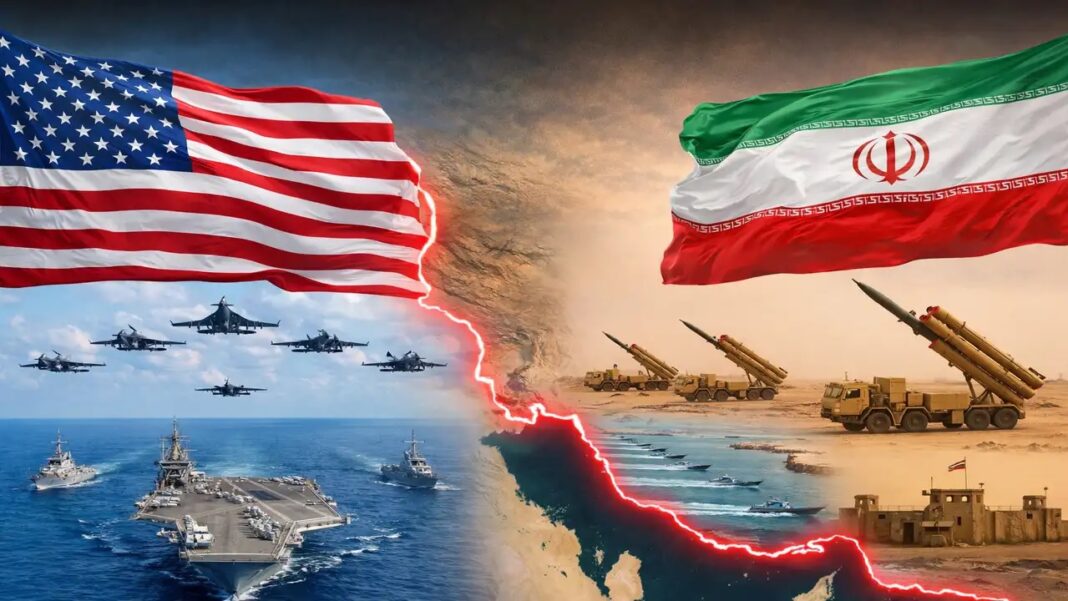
If this conflict expands into a prolonged confrontation between the US, Israel, and Iran’s network, the war will not be short. It will not be clean. And it will not end with a flag raised over a captured capital.
Because capitals are not the source.
Ideology is. And ideology must be neutralised differently.
That does not mean appeasement. It means sophistication. It means information warfare. It means digital counter-radicalisation. It means empowering alternative Islamic scholarship that rejects theocratic absolutism. It means leveraging internal fractures within the Iranian elite. It means economic strategies that bypass regime patronage networks rather than strengthen them.
In mythology, Kali did not negotiate with Raktabeej. She annihilated him – but intelligently.
The current approach risks creating more Raktabeejs across the region. In Lebanon. In Iraq. In Yemen. In Gaza. Even in Western cities where online radicalisation spreads faster than missiles fly.
You cannot bomb an idea into extinction. You can only dry the soil it feeds on.
The uncomfortable truth is this: if the US and Israel continue to fight only kinetically, they may win battles and lose generations. They may destroy facilities and create myths. They may eliminate leaders and manufacture martyrs. And martyrs replicate faster than soldiers.
The world stands at a precarious moment. Oil markets tremble. Regional alliances recalibrate. Global powers watch carefully. China calculates. Russia observes. Europe hesitates.
But the core lesson from ancient wisdom remains stunningly relevant.
Understand the nature of the beast before you strike.
Raktabeej was terrifying – not because he was strong, but because he multiplied through the very act of being attacked.
Islamic radicalism, when confronted without strategic clarity, behaves the same way.
The war against it cannot merely be fought on battlefields. It must be fought in narratives, in education, in economic architecture, in theology, in cyberspace.
Until the blood stops touching the ground, the demons will keep rising.
And history will record that the world mistook replication for resilience, and reaction for strategy.
Kali won because she adapted. The question is — will modern powers?