


Key Takeaways
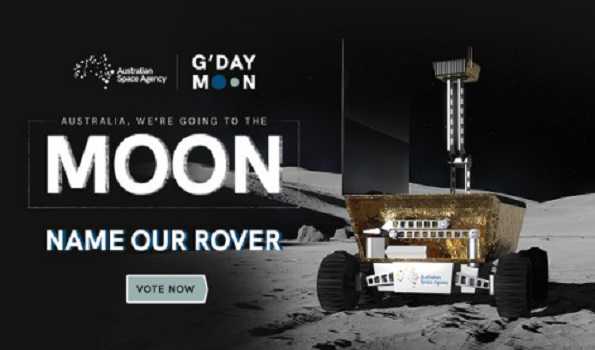
- The public can vote on the moon rover name between now and Dec. 1, choosing from Coolamon, Kakirra, Mateship, or Roo‑ver.
- The rover will be sent to the moon on a NASA Artemis mission slated for 2026‑2027 to test oxygen‑extraction technologies.
- The naming reflects Indigenous culture, with Kakirra meaning “moon” in Kaurna language and Coolamon referencing a traditional carrying vessel.
Canberra: Australians have been offered the opportunity to vote on the name of the country’s first moon rover.
The Australian Space Agency (ASA) on Monday announced a shortlist of four names for the rover, which were chosen from over 8,000 submissions from the public.
From Monday until Dec. 1, Australians will be able to vote on whether the rover will be named Coolamon, Kakirra, Mateship or Roo-ver, with the winner to be announced on Dec. 6.
The candidates were chosen from the submissions by an ASA panel of judges based on relevancy, creativity, and the rationale provided by the person who submitted them.
A coolamon is a vessel used by Indigenous Australians for gathering and carrying, Kakirra means “moon” in the language of the Kaurna Aboriginal people of South Australia (SA) — where the ASA is based — mateship is a cultural term in Australia for a national character trait of friendship and roo-ver incorporates Australia’s iconic kangaroos.

After being named, the rover will be sent to the moon under an agreement with NASA on one of its Artemis missions, which is aiming to launch in 2026 or 2027.
Once on the moon, ASA head Enrico Palermo told Australian Broadcasting Corporation (ABC) television that the rover would have an important mission.
“The rover will go to the surface of the moon on a NASA rocket and collect lunar soil and it will take it to a machine that will assess if we can extract oxygen,” he said.
“If we can have oxygen on the moon and we can start to develop that sustainable presence on the moon for humans.”
Its design will be chosen from two consortiums made up of Australian industries, space start-ups, universities and resource companies that were in March each awarded 4 million Australian dollars (2.6 million US dollars) in funding to develop their vehicles.