


Key Takeaways
- The Supreme Court ruled that addressing someone as ‘Miyan-Tiyan’ or ‘Pakistani’ in poor taste does not constitute an offence under Section 298 of the Indian Penal Code (IPC).
- The Court observed that there was no evidence of assault or use of force by the appellant to warrant a charge under Section 353 IPC.
- The Supreme Court held that the appellant could not be charged under Section 504 IPC, as there was no act on his part that could have provoked a breach of peace.
- internal_linking_keywords
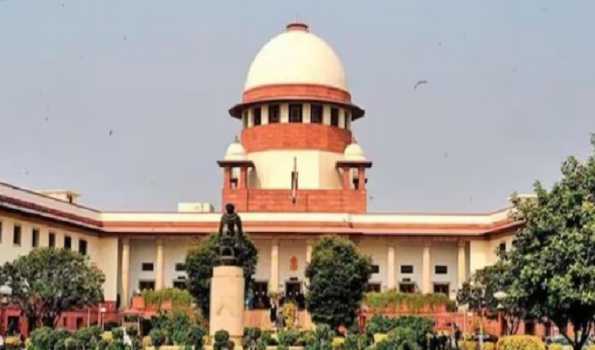
New Delhi: The Supreme Court on Tuesday ruled that addressing a person as “Miyan-Tiyan” or “Pakistani” in poor taste does not constitute an offence under Section 298 of the Indian Penal Code (IPC) related to hurting religious sentiments.
Discharging an individual from the charge under Section 298 IPC (uttering words with deliberate intent to wound religious feelings), the Court stated, “The appellant is accused of hurting the religious feelings of the informant by calling him ‘Miyan-Tiyan’ and ‘Pakistani.’
Undoubtedly, the statements made are in poor taste. However, they do not amount to hurting the religious sentiments of the informant.”
A bench comprising Justice B.V. Nagarathna and Justice Satish Chandra Sharma was hearing an appeal against a judgment of the Jharkhand High Court, which had refused to discharge the appellant from the case.
The FIR was lodged by an Urdu translator and acting clerk (Right to Information) at the Sub-Divisional Office, Chas.
The complainant alleged that when he visited the appellant to provide information related to an RTI application, the accused verbally abused him made references to his religion, and used criminal force to obstruct his official duties.

Consequently, charges were framed against the appellant under Sections 353, 298, and 504 of the IPC.
The Supreme Court, however, found that the complaint did not establish the necessary ingredients for these offences. It observed that there was no evidence of assault or use of force by the appellant to warrant a charge under Section 353 IPC.
Additionally, the Court held that the appellant could not be charged under Section 504 IPC, as there was no act on his part that could have provoked a breach of peace.
Senior Advocate A. Sirajudeen, along with Advocates Arya Kumari, Divya Singhvi, Pardeep Gupta, Parinav Gupta, Mansi Gupta, and Vipin Gupta appeared for the Accused.
Standing Counsel Vishnu Sharma, along with Advocates Shiv Ram Sharma, Tulika Mukherjee, Venkat Narayan, and Beenu Sharma appeared for the State.