

Key Takeaways
- Dr Rangarajan emphasized the importance of understanding and integrating legal and economic principles to enhance policy-making and governance in India and globally.
- Competition law is crucial in ensuring fair markets and societal welfare by preventing monopolistic practices and oligopolies.
- Dr Rangarajan highlighted the significance of Pareto Optimality in describing the most efficient allocation of resources.
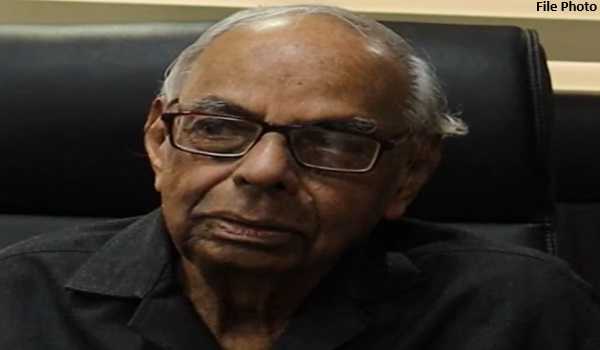
Hyderabad: Dr. C. Rangarajan, former Governor, Reserve Bank of India and Chancellor of ICFAI, has emphasised the critical importance of understanding and integrating legal and economic principles to enhance policy-making and governance in India and globally.
Delivering his inaugural address virtually at the two-day Faculty Development Program (FDP) on “Law and Economics” organised by the ICFAI School of Social Sciences (ISoSS), ICFAI Law School, and CUTS Institute for Regulation & Competition (CIRC) at the ICFAI Foundation for Higher Education Campus, Dr. Rangarajan outlined the significance of economic legislation, the analysis of laws from an economic perspective, and the broader impacts of judicial decisions on the economy.
Monopolistic practices and oligopolies hinder fair markets and societal welfare. Competition law plays a crucial role in preventing these inefficiencies.
Dr. Rangarajan also discussed concepts like Pareto Optimality and the evolution of India’s legal framework, citing the transition from the MRTP Act to the Competition Act of 2002.
The former RBI Governor on Thursday urged legal professionals to grasp economic principles and for judges to consider the economic implications of their rulings. “Law and economics,” he said, “is a vital branch that seeks to enhance societal welfare and efficiency through innovative legislation and judicious governance.”
Further, he focused on three pivotal aspects: the importance of economic legislation, economic analysis of law, the economic impacts of judicial decisions.
In his keynote address, Dr. Navneet Sharma, Director General of CIRC, emphasised the foundational role of Kautilya’s Arthashastra, the evolution of the legal framework during the colonial era, and the modern relevance of tools like statistical analysis and quantitative methods in legal studies.

In his welcome address, Prof. L.S. Ganesh, Vice Chancellor of ICFAI, highlighted the transformative potential of integrating law and economics in addressing the complex challenges faced by society.
The Two-day FDP aims to foster interdisciplinary collaboration among scholars, policymakers, regulators, and industry experts to address pressing societal and economic challenges through innovative intersections of law and economics.
The event has brought together over 50 participants, including faculty members, research scholars, and policymakers from across India.
The program explored five key themes: Economics of Competition Law, Cybersecurity Laws and Regulations, Family Laws: Gender Equality and Empowerment, Gig Economy and Worker Welfare, Law and Economics for Sustainable Development.
Prof. C.S. Shylajan, Director, ISoSS, also spoke.
Dr. Sushanta Kumar Mahapatra, Associate Professor of Economics, Dr. Polishetty Kesari, Associate Professor, ICFAI Law school, eminent experts from academia, regulatory bodies and industry participated in the event.