


Key Takeaways
- The Himachal Pradesh High Court granted relief to JSW Power Company by allowing their writ plea, upholding CERC’s tariff regulations and protecting contractual obligations.
- The court’s verdict underscores the judiciary’s role in ensuring regulatory consistency and protecting contractual obligations against unilateral policy changes.
- The court allowed JSW’s writ petition, instructing the respondents to align the free power provisions in their agreements with the CERC’s 2019-2024 Tariff Regulations.
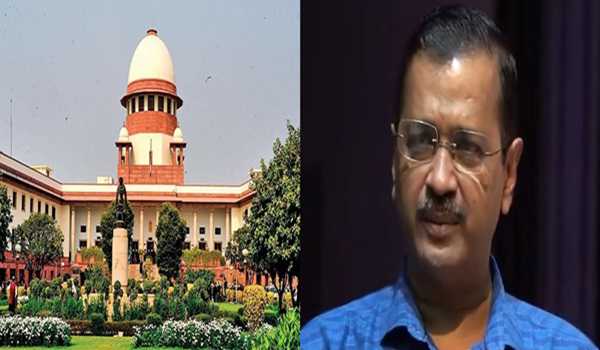
Shimla: Himachal Pradesh High Court granted relief to JSW Power Company by allowing their writ petition, which contested the state’s decision to increase royalty charges from 12 per cent to 18 per cent.
The Division Bench, comprising Justice MS Ramachandra Rao and Justice Jayotsana Rewal, authored a verdict in favour of JSW on Tuesday, thereby restraining the state from implementing the higher royalty rate.
JSW challenged the state’s 2023 decision to enhance the royalty, arguing that the existing tariff regulations at the time of their agreement capped free power at 13 per cent.
Represented by former Union Minister P. Chidambaram, JSW asserted that their project is governed by the Central Electricity Regulatory Commission (CERC) under the Electricity Act of 2003.
They argued that the Implementation Agreement and subsequent agreements, which stipulated 12% free power for the first 12 years and 18% thereafter, should prevail over the state’s new policy.
The CERC had declared that any stipulations for free power beyond this cap in the Power Purchase Agreements (PPAs) and Power Sale Agreements (PSAs) would be inconsistent and must be aligned with the 2019 Tariff Regulations.
The CERC had declared that any stipulations for free power beyond this cap in the Power Purchase Agreements (PPAs) and Power Sale Agreements (PSAs) would be inconsistent and must be aligned with the 2019 Tariff Regulations.
Given this context, the court found no justification to deviate from the CERC’s order. It ruled that the Implementation Agreement dated November 18, 1999, and subsequent supplementary agreements between JSW and the state must be realigned to comply with the 2019 Tariff Regulations.

Consequently, the provisions requiring JSW to supply 18% free power were deemed invalid, and the court directed the state to adjust any excess power supplied above the 13% cap accordingly.
The court’s judgement emphasised that the existence of an arbitration clause in the Implementation Agreement did not bar JSW from seeking relief under Article 226 of the Indian Constitution.
Therefore, the court allowed JSW’s writ petition, instructing the respondents to align the free power provisions in their agreements with the CERC’s 2019–2024 Tariff Regulations.
This verdict underscores the judiciary’s role in ensuring regulatory consistency and protecting contractual obligations against unilateral policy changes.
By upholding the CERC’s tariff regulations, the court affirmed the principle that statutory regulations override contractual provisions when conflicts arise, providing a clear framework for the determination of free power supply obligations for hydropower projects.
In a significant policy shift, the Himachal Pradesh government recently shortened the land lease period for hydro-power developers from 99 years to 40 years and decided to raise the royalty rates.
The new policy mandates that hydropower projects supply 15% free power to the state for the first 12 years, increasing to 20% for the next 18 years, and 30% for the final 10 years. After this period, the projects revert to state ownership without cost or encumbrances.
Despite these changes, the petitioner, JSW, had been providing 12% free power to the state for the past 12 years as per their original agreement.