


Key Takeaways
- JKRTC has raised concerns over the bus entry ban in Srinagar, causing daily revenue loss of Rs. 4 lakh and significant disruptions to public transport services.
- The bus entry ban has caused a financial loss of Rs. 4 lakh daily for JKRTC, affecting public transport services.
- JKRTC officials demand that the bus entry ban be lifted to prevent significant disruptions to public transport services and daily revenue loss.
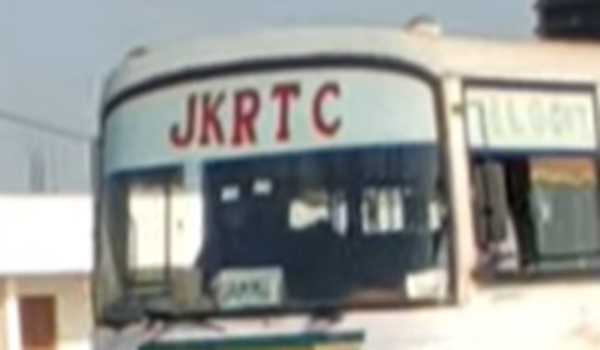
Srinagar: Jammu and Kashmir’s Road Transport Corporation (RTC), a crucial backbone of public transportation, has raised serious concerns over the barring of its buses from entering Srinagar city limits.
The bus entry ban has triggered alarm within JKRTC, with officials cautioning about significant disruptions to public transport services and daily commutes, alongside substantial financial losses for the Corporation.
The restriction, in effect since November 4 when the maiden session of the Assembly commenced, is causing a daily revenue loss of Rs. 4 lakh to the Corporation.
In a letter to the Inspector General of Police (IGP), Kashmir, the Managing Director (MD) of JKRTC highlighted that buses from north Kashmir districts are stopped at Bemina Bypass, while those from south Kashmir are halted at Pantha Chowk.
“The general masses are facing significant hardships and are regularly approaching JKRTC with their woes. The issue has now become an administrative one and needs to be redressed at the highest level,” the MD wrote.
The MD emphasized that the Corporation had been earning Rs. 8 lakh daily from the operation of these buses, which has now halved to Rs. 4 lakh, causing significant losses to the state exchequer.

The restriction, he argued, is a major setback to seamless passenger movement, disproportionately affecting thousands of commuters who depend on affordable and accessible transport.
Providing context, the MD in the letter noted that in 2020-21, the J&K Government allocated Rs. 200 crores to JKRTC. The Corporation used the funds to procure a fleet of 655 buses and trucks, of which 125 buses were dedicated to inter and intra-district operations.
“These BS-VI, pollution free buses catered the transport needs at every nook and corner in the UT of J&K and have become lifeline for the poor people of Kashmir Division. These buses were operating un-interpreted since October-2021 and general public were benefited to their best satisfaction,” the MD said.
The initiative not only boosted transport connectivity but also marked the beginning of a financial turnaround for the debt-laden Corporation. The government’s investment was intended to make JKRTC self-reliant, with earnings from operations sustaining its expenditures.
The ban has not only drawn criticism from RTC officials but has also sparked anger among passengers. The buses had grown in popularity as an economical and reliable mode of transport, especially after the government restricted maxi cab (small passenger vehicles) from entering the city limits a few years ago.
“These buses solved many of our transportation issues,” said Sajad Ahmed, a resident of Sopore in north Kashmir. “The fares were affordable, and they served as a lifeline for daily commuters, especially employees. Unfortunately, it seems like Kashmir is the only place where authorities discourage public transport while promoting private car usage.”