
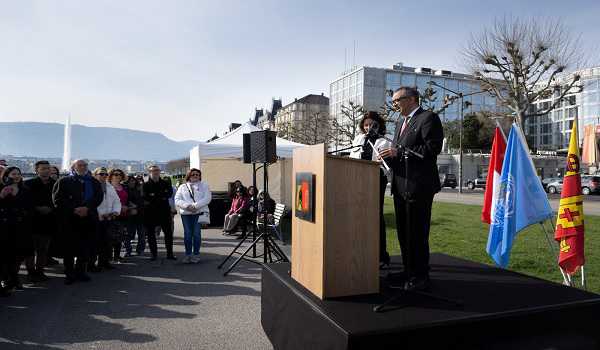

Geneva: On the eve of its 75th anniversary, the World Health Organization (WHO) marked the occasion on Thursday by calling for a renewed drive for health equity in the face of unprecedented threats.
Seventy-five years ago, after years of war, the nations of the world agreed to set up a new organization and “debated and agreed what this organization would be and do in a document called the Constitution of the World Health Organization,” the organization’s Director General, Tedros Adhanom Ghebreyesus, recalled at a press briefing here on Thursday.
“Tomorrow marks the 75th anniversary of the day that Constitution came into force. It was, and is, a landmark document,” he said.
The past decades have witnessed extraordinary progress in protecting people from diseases and destruction, including smallpox eradication, reducing the incidence of polio by 99 percent, saving millions of lives through childhood immunization, declines in maternal mortality, and improving health and well-being for millions more.
“And for the past three years, the WHO has coordinated the global response to the COVID-19 pandemic – the most severe health crisis in a century. We can’t claim sole credit for these achievements, but we have played a leading role in all of them,” Tedros said.

Despite the achievements, the WHO chief said that the world is still faced with many old and new challenges, particularly vast inequities in access to health services, major gaps in defense against health emergencies, and threats from health-harming products and the climate crisis.
To meet these challenges, the WHO urges countries to take urgent action to protect, support and expand the health workforce as a strategic priority. To avert a shortage of 10 million health workers globally by 2030, primarily in low and middle-income countries, the WHO recommends that investments in education, skills and decent jobs for health should be prioritized.
It has recently initiated a global education program on basic emergency care targeting 25 percent of nurses and midwives in 25 low and middle-income countries by the end of 2025. The program will provide nurses and midwives with the skills and competencies needed to make a major difference in saving lives.
“The WHO’s own story began 75 years ago, and it is still being written. The challenges we face today are very different to those in 1948, but our vision remains unchanged: the highest possible standard of health, for all people,” Tedros said.