



Key Takeaways
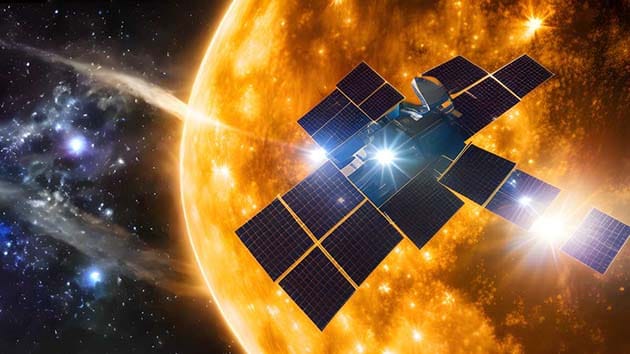
- The Aditya-L1 Mission will be India’s first solar observatory, launching from Sriharikota.
- Former ISRO scientist Nambi Narayanan highlighted the importance of global data sharing for solar research.
- Following the Chandrayaan-3 lunar success, the mission aims to study the Sun’s outer atmosphere in detail.
On Monday, August 28, the ISRO announced that the Aditya-L1 Mission is set to launch on Saturday, September 2, from the Sriharikota port of Andhra Pradesh at 11.50 PM.
After the successful soft‑landing of the Chandrayaan-3 spacecraft on the Moon’s south pole, this solar mission will become a major focus for the nation, marking India’s first space‑based observatory.
Speaking on the same, former ISRO scientist, Nambi Narayanan, interacting with PTI, said that any research, with respect to the planets, stars, and the galaxies, are certainly going to give you certain inputs.
‘We are in the process of learning, and some people are ahead of us in this, particularly the Americans. I do not know whether they have given us all the data available, in the public domain. The same thing is with China, I do not think that China has given all the information. Now, we are in the race, so we will also get data.’, he stated.

He further expressed, ‘Generally, the scientific community is not politics-oriented, with respect to data. So, it is actually shareable. Similarly, the ISA and the NASA, they are supporting you, they are not political organizations. They are scientists.’
Talking about Aditya-L1, Narayanan said, ‘Aditya, I think, means the Sun. I said this particularly because nowadays, we are trying to introduce some kind of politics into everything. Because Aditya can mean something else also, if you look at it in Sanskrit dictionaries. So, I am saying that Aditya was named long back. In a very plain language, if I have to say, this is to study the Sun in a very close contact.’
‘As you know, the Sun is the nearest star to planet Earth, and actually, it is nothing but a hot mixing of helium and hydrogen gases, they are burning and this is the closest star to you, and this is about 150 million KM away from you.’, he added.