
Key Takeaways
- The Chief Justice’s ‘satisfaction’ remark raises concerns about judicial bias and overreach.
- Upholding constitutional text and due process is essential for ensuring the independence and impartiality of the judiciary.
- Judges must remember that their role is to interpret the law, not to impose their personal feelings or biases.
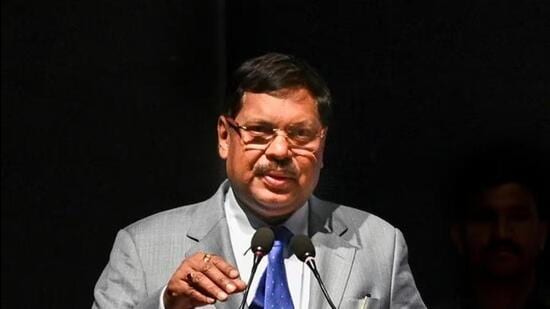
When Chief Justice of India B. R. Gavai recently remarked that banning bulldozer actions gave him “immense satisfaction,” he perhaps meant to highlight compassion for families facing demolitions. Yet, in those words lies a disquieting truth. The shift of judicial reasoning from constitutional text to personal gratification. Courts are meant to uphold law, not feelings. When satisfaction becomes a touchstone, the boundary between impartial adjudication and judicial activism begins to blur.
The Law vs. the Bulldozer
The so-called “bulldozer justice” was never about architecture; it was about process.
The case in question was Jamiat Ulama I Hind vs. North Delhi Municipal Corporation. In this matter, the petitioners challenged demolitions in Delhi’s Jahangirpuri area, arguing that homes and shops were razed as punitive measures against accused persons without trial or proper procedure. A bench led by CJI Gavai and Justice K. V. Viswanathan ruled that such actions violated Article 21 (right to life and dignity) and the principle of rule of law.
In short, the judgment sought to restore constitutional due process.
Why the Words Matter
When a Chief Justice publicly says a verdict “gave immense satisfaction,” it sends a dangerous message: that judgments are about what judges feel, not what the Constitution dictates. The executive may then accuse the judiciary of selective empathy, guided by ideological leanings rather than universal principles.
Consider this: tomorrow another bench could say immense satisfaction came from upholding bulldozer action in the name of deterrence. If emotion becomes precedent, the law becomes hostage to sentiment.
The Overreach Question
India’s judiciary has often stepped into the shoes of legislature and executive, from environmental bans to urban planning, to now executive demolitions. Some call it moral leadership; others see it as judicial overreach. What CJI Gavai’s remark does is confirm the suspicion: the court did not just interpret the law, it took satisfaction in restraining governance. That’s a line the Constitution never permitted.

When Judges Speak, Words Become Doctrine
The unease is not confined to bulldozer justice. In September 2025, while hearing a plea to restore a mutilated Vishnu idol in Khajuraho’s Javari temple, CJI Gavai dismissed the petitioner by saying: “Go and ask your Lord Vishnu to do something. You say you are his staunch devotee, so go and pray.”
For Hindus, this was more than casual courtroom banter. It was a mockery of faith. When the highest judge tells a devotee to take refuge in prayer rather than law, it undermines both judicial seriousness and cultural sensitivity. Though Gavai later clarified that he “respects all religions,” the sting remained. For devout Hindus, it sounded like the judiciary was trivializing their belief, even as similar cases involving other faiths have been treated with solemnity.
This is the larger danger: when judicial rhetoric itself begins to appear uneven, when sarcasm replaces sobriety, it fosters the perception of bias and selective empathy. In a country as plural as India, a judge’s stray words echo far beyond the courtroom.
A Soldier’s Reflection
In uniform, we were taught that orders must stand scrutiny not of intent, but of procedure and principle. A commander who justifies his actions by saying “it gave me satisfaction” invites suspicion. Likewise, a judge who mocks a petitioner’s faith or describes his verdict as satisfying may erode faith in neutrality. The soldier’s rifle and the judge’s pen share a truth. Both must be wielded with restraint, never with pleasure.
Conclusion
The bulldozer judgment, should have been remembered for reinforcing due process. But CJI Gavai’s remark risks overshadowing its legal value with the shadow of bias. Coupled with his insensitive quip on the Vishnu idol case, it deepens doubts about neutrality and consistency.
In times when the institution for justice is under scrutiny, India needs judges who say “the law compelled me,” not “it gave me satisfaction.” And above all, judges must remember that in a land where faith runs deep, even a word can heal …….or hurt. Justice must not only be done, it must be spoken with dignity, without the sting of mockery or the glow of personal triumph.
DISCLAIMER: This article reflects author’s view point. Goa Chronicle may or may not subscribe to views of the author