

Politics, much like family, is a curious institution.
It nurtures, guides, protects, disciplines, and creates opportunities. Yet its greatest success is not measured by how long it can keep an individual within its fold, but by whether it has prepared that individual to stand independently when the time comes.
K. Annamalai’s resignation from the BJP and his decision to launch a new political movement has generated predictable reactions across India’s political spectrum. Supporters are emotional. Critics are celebratory. Party loyalists are disappointed. Political analysts are busy calculating gains and losses.
But perhaps all of them are missing the larger story.
Sometimes children simply outgrow the shadow of the family.
And there is nothing wrong with that.
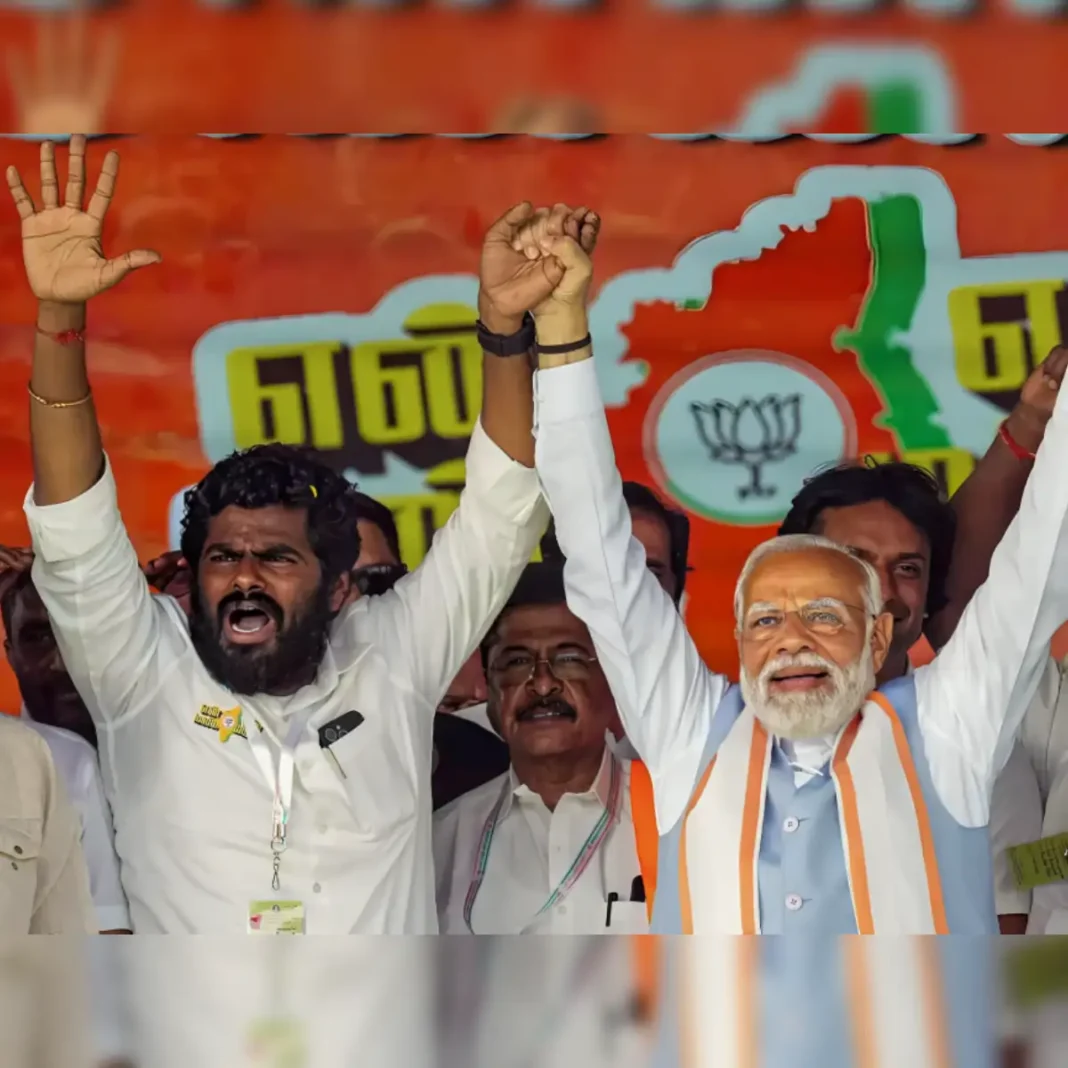
For six years, Annamalai was one of the BJP’s most recognisable faces in Tamil Nadu. When he entered politics after his career in the Indian Police Service, many dismissed him as an outsider. Yet through relentless grassroots engagement, direct communication, and a willingness to confront entrenched political narratives, he transformed himself into a political phenomenon. Whether one agreed with him or not, nobody could ignore him.
The BJP gave him a platform. Annamalai gave the BJP a face. Both statements are true.
This is why attempts to portray the relationship as one-sided are intellectually dishonest. Political growth is rarely a story of a party creating a leader. More often, it is a story of a leader and an institution shaping one another.
The BJP invested in Annamalai. Annamalai invested his political capital in the BJP. That chapter has now ended.
The important question is whether ending a chapter automatically means betrayal.
I do not believe it does.
Every healthy family eventually witnesses a moment when a son or daughter decides to build something of their own. Parents may feel anxious. Siblings may feel hurt. Relatives may gossip. Yet maturity lies in understanding that independence is not rejection.
A child leaving home is not necessarily abandoning the family. He may simply be discovering who he is.
The same principle applies to politics.
Many commentators are trying to reduce Annamalai’s departure to personality clashes, strategic disagreements, or electoral calculations. Those factors undoubtedly exist. Politics is never free from such realities. Reports suggest there were differences over Tamil Nadu’s political direction and alliance strategies.
But history teaches us that movements are often born when individuals begin feeling constrained by existing structures.
That does not automatically make the structure wrong. Nor does it automatically make the individual right.
It simply means the journey has reached a crossroads.
The BJP has every right to pursue its vision for Tamil Nadu. Annamalai has every right to pursue his. Democracy is strong enough to accommodate both.
What impresses me most is not that Annamalai resigned. Politicians resign every day. What is significant is that he resigned to build, not merely to complain.
There is a difference.
Many leaders leave organisations and spend the rest of their careers attacking the institutions that once nurtured them. They become professional critics, living off yesterday’s grievances.
Annamalai appears to be attempting something different.

He is asking the people of Tamil Nadu to judge him not by what he left behind, but by what he intends to create. His message is simple: a new path, a new movement, a new political alternative.
Whether that experiment succeeds is another matter entirely.
Politics is littered with the graves of ambitious movements.
For every successful political force that changed history, hundreds disappeared without leaving a trace.
The electorate is the ultimate judge. Not television debates. Not social media trends. Not political consultants.
The people.
And that is exactly how it should be.
There is another lesson here for political parties across India. Institutions must never become insecure about the success of the leaders they create.
A teacher’s success is measured by the achievements of the student.
A parent’s success is measured by the confidence of the child.
A political party’s success should be measured by the quality of leadership it produces.
If some of those leaders eventually develop independent aspirations, that is not always a sign of organisational failure. Sometimes it is evidence that the institution succeeded in nurturing strong personalities capable of standing on their own.
The BJP remains a national force under Prime Minister Narendra Modi. It will continue its political journey with or without Annamalai.
Likewise, Annamalai’s future will now depend entirely on his ability to convert personal popularity into a sustainable political movement.
The safety net is gone.The responsibility is his alone.That is both the risk and the beauty of independence.
Tamil Nadu politics is entering a fascinating phase. Traditional Dravidian politics is being challenged from multiple directions. New political formations are emerging. Younger voters are less emotionally attached to historical narratives than previous generations.
In such an environment, the emergence of a new movement should not be feared.
It should be tested. If it has merit, it will grow. If it lacks substance, it will fade. That is democracy’s natural process.
As for Annamalai, history may ultimately judge him as a visionary, a disruptor, a reformer, or merely an ambitious politician who overestimated his appeal.
Today, nobody knows.
But one thing is certain.
A child who steps beyond the family shadow should not automatically be condemned for leaving.
Sometimes the journey away from home is not an act of rebellion. Sometimes it is simply the beginning of becoming who one was always meant to be.