



Key Takeaways
- Bengal’s battle is a civilisational one that requires patience, ideological clarity, and moral courage.
- The Left hollowed out Bengal’s economy, while the post-Left ecosystem hollowed out its social courage.
- The BJP must engage in sustained grassroots work and intellectual rebuttal of hostile narratives to win the civilisational battle in West Bengal.
- B L Santosh‘s remark sets the terms of engagement honestly, without euphemisms, without fear.
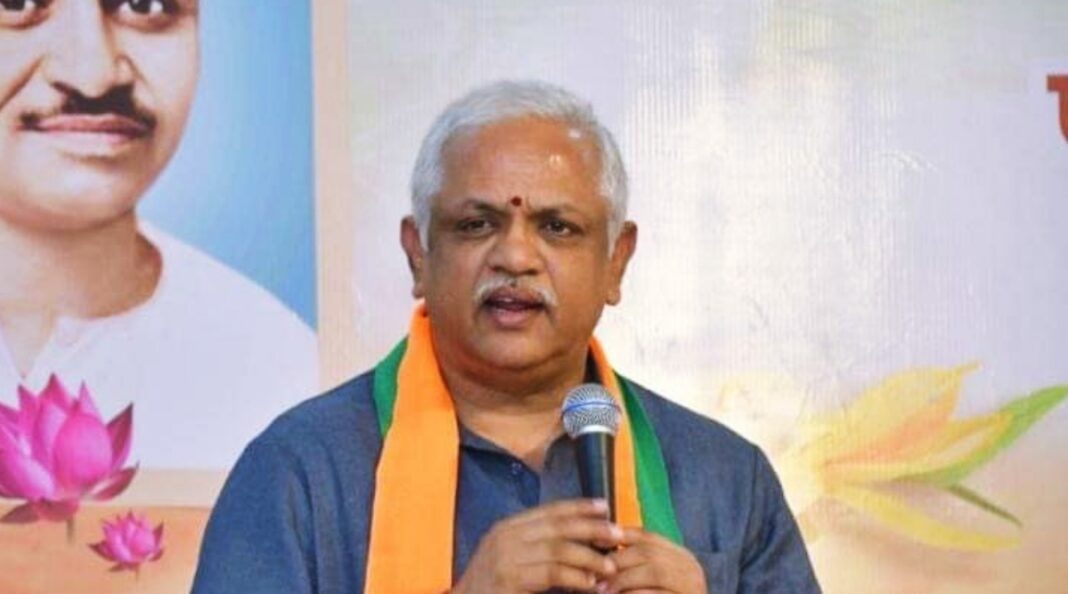
When B L Santosh, the organisational secretary of the Bharatiya Janata Party, declared at the Sagar Manthan in Goa that “Bengal is not a political battle but a civilisational battle”, he was not indulging in rhetorical excess. He was stating a hard truth that many in India’s drawing rooms, news studios, and academic corridors are uncomfortable acknowledging.
Politics is about power. Civilisation is about survival. Elections come and go, governments change, but civilisation – once eroded – rarely returns to its original form. Santosh’s words cut through the noise because West Bengal today is not merely voting between parties; it is negotiating the fate of its cultural memory, social fabric, and historical consciousness.
Bengal was once the intellectual lighthouse of India. From Bankim Chandra to Vivekananda, from Tagore to Aurobindo, Bengal shaped the moral and philosophical spine of the Indian renaissance. It was here that nationalism acquired a soul, not just slogans. Today, that same land witnesses ideological violence, selective outrage, targeted political killings, and a systematic shrinking of space for Indic civilisational expression. To describe this merely as “law and order” or “electoral politics” is to deliberately trivialise a deeper churn.
A civilisational battle is fought not only on streets but in classrooms, temples, festivals, language, art, and collective self-respect. Civilisation is under siege when Durga Puja committees are told what can or cannot be celebrated, and when religious processions are policed differently based on identity. This is what Santosh was pointing towards – a long-term ideological project that goes far beyond ballot arithmetic.
Bengal today mirrors a larger global pattern where rooted civilisations are pressured to dilute themselves in the name of “progressive politics,” while aggressive ideological imports are allowed free rein. The paradox is stark: the native civilisation must constantly justify its existence, while those who challenge it are described as “voices of resistance.” This inversion is not accidental; it is strategic.

At Sagar Manthan, Santosh reminded the BJP cadre that winning Bengal is not about replacing one chief minister with another. It is about restoring confidence to a society that has been taught to apologise for its own heritage. It is about reclaiming public spaces for cultural assertion without fear. It is about ensuring that political violence does not become normalised, and that the state does not turn into an enforcer of ideological conformity.
Critics will, predictably, label this as polarisation. But history teaches us that silence in the face of civilisational erosion is not neutrality – it is complicity. The Left hollowed out Bengal’s economy. The post-Left ecosystem hollowed out its social courage. What remains is a society rich in memory but fatigued in spirit.
Santosh’s remark was also a message to the BJP itself. Civilisational battles require patience, ideological clarity, grassroots work, and moral courage. They cannot be fought with election-time optics alone. They demand sustained engagement with society, intellectual rebuttal of hostile narratives, and protection of those who stand up for cultural truth.
Bengal’s battle will be long. It will be messy. It will invite resistance from entrenched interests who profit from chaos and fear. But acknowledging the nature of the battle is the first step towards winning it. By framing Bengal as a civilisational contest, B L Santosh has set the terms of engagement honestly – without euphemisms, without fear.
Politics may decide who rules for five years. Civilisation decides who we are for generations. Bengal’s fight, therefore, is not just Bengal’s. It is India’s.