
Key Takeaways
- BJP’s Biggest Mistake: Losing its underdog appeal by entering into an alliance with the AIADMK.
- Tamil Nadu Politics: The state’s youth increasingly view the DMK and AIADMK as two pillars of the same political establishment.
- Underdog Appeal: The BJP’s underdog appeal mattered in Tamil Nadu because it symbolized hope and possibility for the state’s youth.
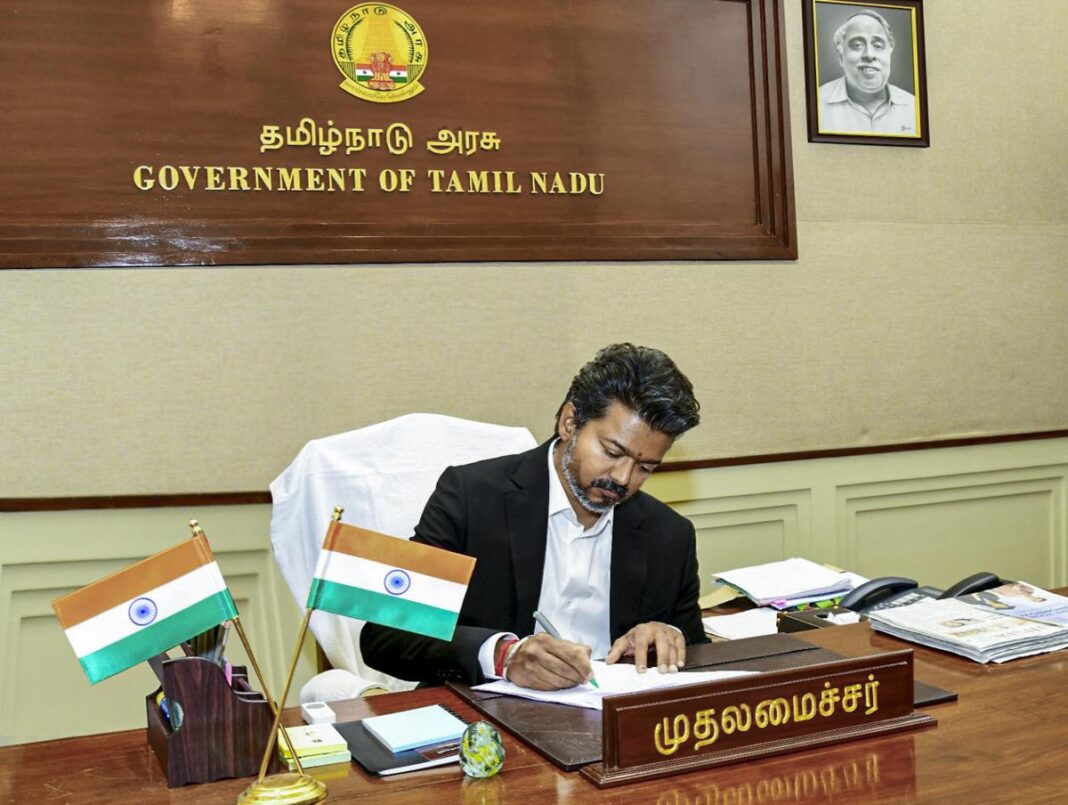
The political story of Tamil Nadu in 2026 is not merely about the rise of Vijay and Tamilaga Vettri Kazhagam TVK. It is about the collapse of an anti-establishment political space that the Bharatiya Janata Party had painstakingly built over the last decade and then inadvertently surrendered.
The youth of Tamil Nadu did not gravitate toward Vijay because he was a film star. Tamil Nadu has seen film stars enter politics before. Nor did they necessarily gravitate toward TVK because they had fully embraced a new ideological framework. They gravitated toward Vijay because he represented something that the BJP once represented in Tamil Nadu: the possibility of disrupting an entrenched political order.
To understand why this happened, one must first understand how the youth of Tamil Nadu increasingly view the state’s political landscape.
Tamil Nadu politics has been dominated by the DMK and AIADMK for over five decades. Young voters increasingly view them as two pillars of the same establishment, rather than political alternatives.
The DMK symbolises entrenched political networks, dynastic succession, and welfare-driven electoral politics, according to many young voters. The AIADMK, particularly after the demise of Jayalalithaa, increasingly appeared to many as a political organisation surviving on legacy and nostalgia rather than presenting a compelling vision for the future.
This does not mean that Tamil Nadu’s youth rejected the DMK or AIADMK outright.
Rather, they no longer believed that either represented political transformation.
It was precisely in this environment that the BJP found political relevance.
For nearly a decade, the BJP in Tamil Nadu carefully cultivated an image of being the outsider. It was not part of the Dravidian establishment. It was not burdened by decades of political baggage. It positioned itself as a force willing to challenge the status quo and offer a different political imagination for Tamil Nadu.
Its greatest strength was not organisational.
Its greatest strength was emotional.
The BJP was the underdog.
And young voters, perhaps more than any other demographic, are instinctively drawn toward political underdogs because underdogs symbolise hope. They represent possibility. They challenge systems that appear permanent.
The BJP’s growth in Tamil Nadu was built on precisely this sentiment.
The party attracted young professionals, entrepreneurs, first-time voters, culturally rooted Tamil youth, and aspirational Indians who believed that Tamil Nadu deserved a political discourse beyond the traditional DMK-AIADMK binary.
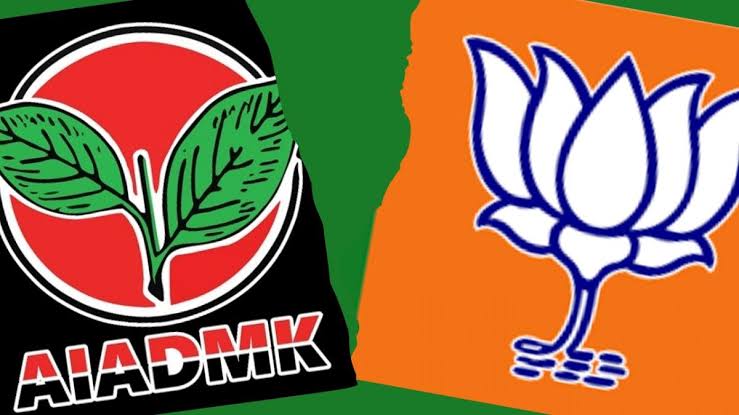
Then came the alliance with the AIADMK.
From the perspective of electoral arithmetic, the decision appeared rational. Political strategists saw vote transfers, organisational infrastructure, caste combinations, and electoral convenience.
But politics, especially among the youth, is rarely driven by arithmetic.
It is driven by perception.
And the perception created by the BJP-AIADMK alliance was politically devastating.
The BJP was no longer fighting the old political order.
The BJP had become part of it.
For years, the BJP had argued that Tamil Nadu needed to move beyond the politics of the DMK-AIADMK duopoly. Yet by entering into an alliance with one half of that duopoly, it created a contradiction that many young voters found impossible to ignore.
The BJP did not lose its appeal because of ideology.
It lost its appeal because it lost its identity.
But there was another, deeper reason why the alliance alienated Tamil Nadu’s youth.
For years, the BJP’s growth in Tamil Nadu had been driven by younger leaders who projected confidence, conviction, and the courage to challenge the existing political order. These leaders did not seek to impose Delhi’s priorities on Tamil Nadu; rather, they sought to articulate Tamil aspirations within the larger national framework.
That distinction mattered.
However, after the alliance with the AIADMK, a perception began to emerge among many young voters that the BJP was no longer behaving like an organic political movement emerging from Tamil Nadu’s aspirations. Instead, it appeared to be acting like a powerful national party using the political authority of the Centre, its organisational machinery, and its financial strength to engineer electoral success in Tamil Nadu.
The perception – fair or unfair – was that the BJP had assumed the role of the political ‘big brother’.
For a generation deeply conscious of its linguistic, cultural, and regional identity, politics cannot merely be about power. It must also be about participation, ownership, and aspiration.

The youth of Tamil Nadu did not want to be politically managed.
They wanted to be politically inspired.
The alliance with the AIADMK inadvertently reinforced the narrative that the BJP’s primary objective was to establish political influence in Tamil Nadu through strategy rather than through aspiration.
This was precisely the political space that Vijay entered.
Vijay arrived without the baggage of the DMK.
He arrived without the legacy burdens of the AIADMK.
He arrived without the perception of being backed by the political authority of the Centre.
He appeared to be exactly what the BJP had once been: an outsider challenging an entrenched system.
The rise of Tamilaga Vettri Kazhagam, therefore, was not merely the rise of a political party.
It was the transfer of political hope.
The youth of Tamil Nadu who gravitated toward Vijay were not necessarily embracing a detailed political manifesto. They were embracing the possibility of political disruption.
They were embracing the underdog.
This is where conventional political analysis often fails. Analysts focus on vote shares, caste arithmetic, alliances, and organisational structures. Young voters increasingly focus on authenticity, aspiration, symbolism, and emotional connection.
The question many young voters in Tamil Nadu subconsciously asked themselves was simple:
If the DMK represents the old political order, and the AIADMK represents the old political order, and now the BJP has aligned with the AIADMK, then who exactly represents change?
The answer they found was Vijay and TVK.
Ironically, the BJP already possessed what it needed to compete in this space.
It had younger leaders capable of inspiring Tamil Nadu’s youth.
It had leaders who understood Tamil identity while embracing a larger national vision.
It had leaders who could have built a uniquely Tamil BJP political movement based on aspiration rather than electoral arithmetic.
What the BJP perhaps lacked was the confidence to trust those leaders, to allow them to grow politically, and to embrace the uncertainty that comes with being an underdog.
The BJP did not need to borrow credibility from the AIADMK.
It needed to believe in itself.
It needed to believe in its younger leaders.
It needed to believe that political movements built on aspiration do not always win immediately, but they eventually redefine politics.
The youth of Tamil Nadu were never looking for the strongest political machine.
They were looking for the political force that believed in them, reflected their aspirations, and was willing to fight alongside them rather than manage them.
The tragedy for the BJP is that it had already begun to build exactly that relationship with Tamil Nadu’s youth.
And in choosing political security over political conviction, it surrendered the one advantage that no electoral alliance could ever replace: the ability to inspire.
Vijay did not take Tamil Nadu’s youth away from the BJP. The BJP surrendered them when it stopped believing that it could, on its own strength and through its own young leadership, become the vehicle of their aspirations. The youth of Tamil Nadu simply placed their hope in the last political underdog left standing.