


Key Takeaways
- The violence against religious minorities in Bangladesh has reached alarming proportions, with reports of attacks, forced conversions, and targeted killings.
- Human rights organizations and advocacy groups are calling for stronger enforcement of laws against religious violence, enhanced security for vulnerable communities, and the prosecution of those responsible for hate crimes.
- The international community is being urged to take diplomatic and economic measures to press Bangladesh into upholding its commitments to human rights and religious freedom.
Human rights organizations and global advocacy groups have raised alarm over the increasing violence against Hindus, Christians, and Buddhists in Bangladesh. Reports of attacks on religious minorities, including assaults, forced conversions, desecration of places of worship, and targeted killings, have intensified concerns over the safety and security of these communities in the South Asian nation.
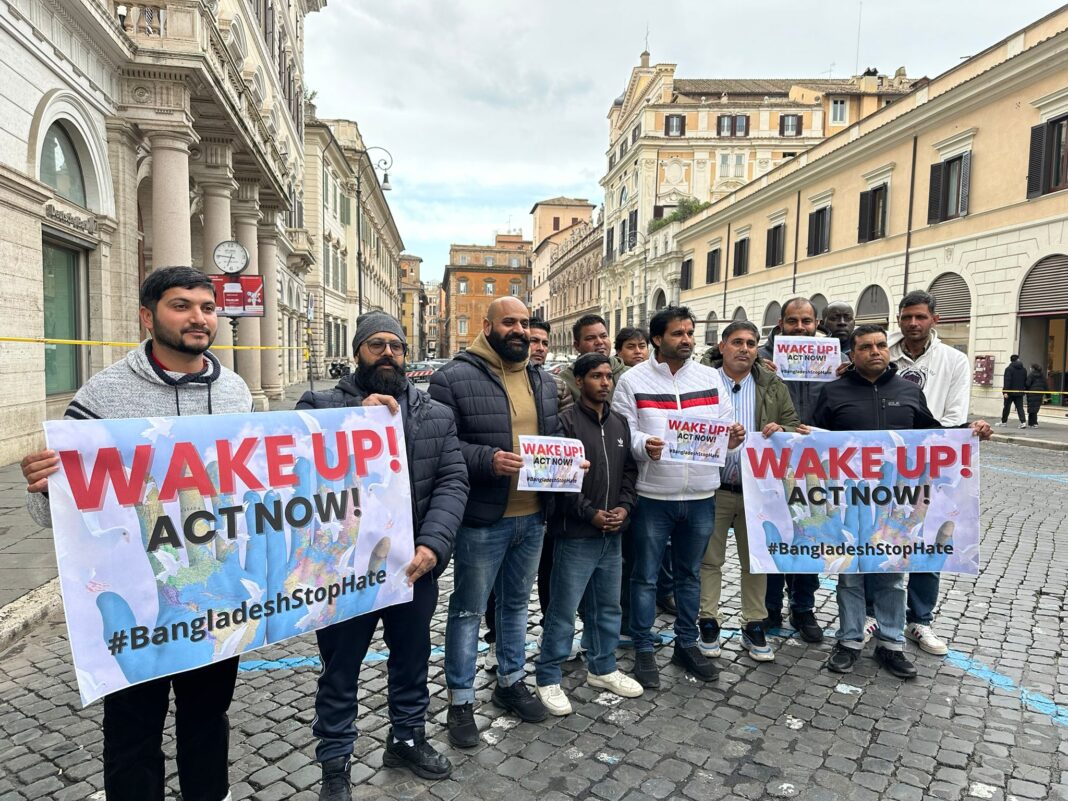
On February 3, the ‘Demonstration for Peace in Bangladesh’ was held in Rome to raise awareness about the attacks on Hindus, Christians, and Buddhists, including the destruction of their places of worship and businesses, since the change of government in the country.
On January 30, 2025, the Bangladesh Hindu Buddhist Christian Unity Council held a press conference in Dhaka, to brief members of the global press on the various acts of violence against minorities in the country. Not much of this information has been highlighted by international media and the global community has largely ignored the acts of violence in this country.
‘The wave of violence against Christians, Hindus, and other religious minorities in Bangladesh has reached alarming proportions. Recent reports show a worrying trend of increasing extremism in the country, with violent incidents targeting Christians, Buddhists, Hindus, and their places of worship. In addition to cases of physical violence, discrimination against religious minorities is systematically manifested in access to employment, education, and justice.
It is important to recall that Bangladesh has ratified key international conventions for the promotion and protection of human rights, including the Universal Declaration of Human Rights and the International Covenant on Civil and Political Rights.
In this context, the silence of the international community is deeply concerning. For this reason, civil society initiatives such as the ‘Demonstration for Peace’, which was held in Rome on February 3, at Piazza dei Santi Apostoli, aim to shed light on the dire conditions in which minorities in Bangladesh are forced to live’, said Senator Giulio Terzi di Sant’Agata, Senator of the Italian Republic and President of the Senate Commission on European Affairs.

According to rights groups, the rise in sectarian violence is fuelled by extremist elements seeking to marginalize religious minorities in the Muslim majority country. Many victims have reported inadequate protection from law enforcement, delayed justice, and impunity for perpetrators.
Since August 4, 2024, religious and ethnic minorities in Bangladesh have been deliberately targeted. Their homes, places of worship and businesses looted, while the state apparatus has remained silent, often categorising violence against minorities as political violence against the former Awami league government and party members.
International human rights bodies, including the United Nations and Amnesty International, have urged the Bangladeshi government to take immediate and concrete steps to protect religious minorities. Advocacy groups are calling for stronger enforcement of laws against religious violence, enhanced security for vulnerable communities, and the prosecution of those responsible for hate crimes.
‘We all, both as human beings and leaders in our respective countries, should stand up for justice and protection of fellow humans when they are attacked because of their religion and identity, regardless of where in the world they might live. I would like to inform that I have addressed the situation in Bangladesh with the Norwegian government’, said Himanshu Gulati, Member of the Nordic Parliament, in a message of support from Oslo.
The international community is being urged to take diplomatic and economic measures to press Bangladesh into upholding its commitments to human rights and religious freedom. Civil society organizations are also calling for increased awareness and intervention to prevent further atrocities.