
Key Takeaways
- Seoul respects the IAEA report confirming that Tokyo’s Fukushima water discharge plan meets safety standards.
- South Korean officials will conduct a special inspection of seafood imports amid concerns over the treated water release.
- The IAEA, a leading U.N.-affiliated nuclear safety body, continues to monitor Japan’s plan to release treated water into the Pacific.
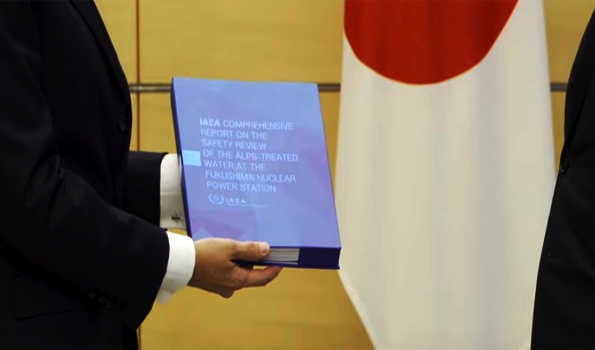
Tokyo: Seoul respects the report of the International Atomic Energy Agency (IAEA) which concluded that Tokyo’s plans to release contaminated water from the Fukushima Daiichi nuclear power plant (NPP) into the sea are in line with safety standards.
A senior South Korean official said on Wednesday that this assessment supports regional health and security concerns.
On Tuesday, the IAEA said that Japan’s plans to discharge treated water from the Fukushima NPP into the sea were in line with IAEA safety standards.
“It has been the government’s longstanding stance to recognize the IAEA as a prestigious internationally agreed-upon agency, and we hold respect for its findings,” Park Ku-yeon, the first deputy head of the South Korean Office for Government Policy Coordination, was quoted by the Yonhap news agency as saying.
The office of South Korean President Yoon Suk-yeol also expressed respect for the IAEA’s findings, saying that the government would place priority on health and security of South Korean people.
“We respect the announcement of the IAEA, which is the leading U.N.-affiliated international organization in nuclear energy safety. The government will place top priority on our people’s health and safety,” a presidential official told Yonhap.

At the same time, South Korea will conduct a special inspection into the imports of seafood products due to concerns over Japan’s planned water discharge, Vice Oceans and Fisheries Minister Park Sung-hoon stated on Wednesday.
In 2021, Japan announced its plans to dispose of Fukushima’s treated water and invited the IAEA to verify that it would be safe.
Some countries, including New Zealand and South Korea, initially opposed Japan’s plans, and Tokyo reportedly hoped that Grossi’s mission to the plant would change their minds.
Tokyo had originally planned to begin discharging water purified of all radionuclides except tritium into the ocean 1 kilometer (0.6 miles) from the NPP this spring.
However, due to adverse weather conditions and other factors, the deadline was pushed back to the summer of 2023.