


Key Takeaways
- The Adity-L1 mission will investigate coronal heating and solar wind acceleration to improve space‑weather forecasting.
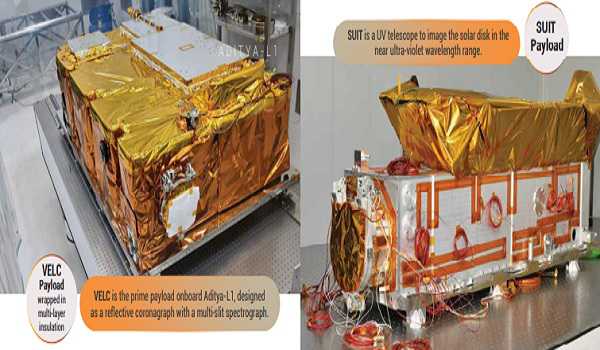
- ISRO plans to capture the first near‑UV spatially resolved images of the solar disk, enhancing our knowledge of CME dynamics.
- On‑board intelligence will detect CMEs and solar flares, optimizing data collection and transmission.
Chennai: As it gears up for its first Solar Interplanetry mission to study the sun, the Indian Space Research Organisation (ISRO) announced the major science objectives of the Adity-L1 spacecraft.
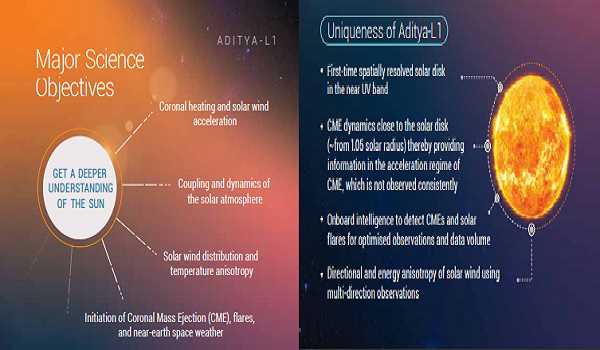
The mission, to be ferried into a Low Earth Orbit by a PSLV vehicle, aims to understand Coronal Heating and Solar Wind Acceleration.
ISRO said other objectives include, understanding initiation of Coronal Mass Ejection (CME), flares and near-earth space weather.

It also also to understand coupling and dynamics of the solar atmosphere and understand solar wind distribution and temperature anisotropy.
On the uniqueness of the Sun mission, it said it will study First time spatially resolved solar disk in the near UV band, CME dynamics close to the solar disk thereby providing information, in the acceleration regime of CME which is not observed consistently.
On-board intelligence to detect CMEs and solar flares for optimised observations and data volume, Directional and energy anisotropy of solar wind using multi- direction observations, are also the unique features of the mission.