

Key Takeaways
- Priests who sexually assault minors are a betrayal of faith, authority, and human vulnerability.
- The POCSO Act provides a framework for protecting children from sexual abuse and exploitation.
- Institutions must have strict policies and procedures in place to prevent abuse by priests and provide support to victims.
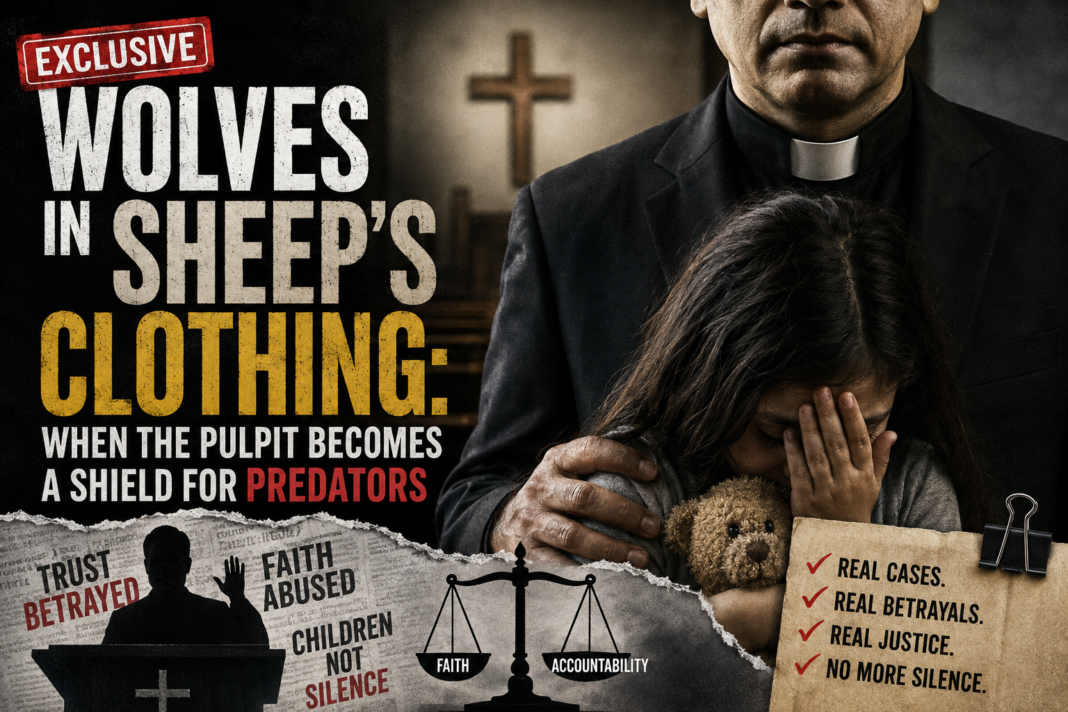
A person entrusted with the spiritual, moral and emotional wellbeing of others can become a predator, causing devastating consequences for the victims. This is a betrayal of faith, authority, and human vulnerability. A priest, pastor or preacher occupies a position of enormous trust. He is welcomed into homes, given access to children, approached by vulnerable families and often treated as a moral authority. When that trust is abused, the crime is not merely sexual. It is a betrayal of faith, authority and human vulnerability.
The recent death sentence awarded by a special POCSO court in Tirunelveli to preacher S. Abraham is therefore more than another criminal conviction. The court found him guilty of sexually assaulting four minor girls over nearly two years and classified the offences as “rarest of rare.” The victims were between eight and 13 years old. According to the prosecution, Abraham used Bible and music classes as a pretext to gain access to the children and threatened them into silence. The court also ordered compensation of ₹10 lakh for each survivor.
This case should force India to confront an uncomfortable question: how many predators hide behind the robes, collars, pulpits and language of faith?
The answer cannot be that every priest or pastor is suspect. That would be both unjust and intellectually dishonest. Millions of Christians in India worship, serve society and dedicate their lives to education, healthcare and charity. Most clergy are not criminals. But precisely because the overwhelming majority are trusted, the criminal minority can exploit that trust with devastating consequences.
The past five years provide several disturbing examples.
In Tamil Nadu, pastor Joseph Raja was convicted in 2023 for sexually assaulting a 17-year-old girl with physical and intellectual disabilities inside a church in Virudhunagar district. In February 2026, the Madras High Court upheld his life sentence, finding the prosecution evidence credible and the punishment proportionate to the gravity of the offence. The case is particularly disturbing because the victim was entrusted to the pastor’s care.
In Maharashtra, Catholic priest Father Vincent Pereira was arrested in November 2022 after allegations that he had sexually abused a minor boy. Police action followed the cancellation of his pre-arrest bail, and another case concerning the alleged abuse had also been registered. The case demonstrates another disturbing dimension of institutional abuse: allegations can involve not only children but also the complicated structures surrounding religious institutions, where authority and personal loyalty can sometimes discourage victims from speaking.
In Tamil Nadu, a church priest in Kanchipuram was arrested under the POCSO Act in July 2024 after allegations of sexual harassment involving a 14-year-old girl. The incident reportedly involved a girl who had visited a church. Whatever the final judicial outcome, the allegation itself illustrates the vulnerability created when religious spaces become places where children assume they are completely safe.
Then came the arrest of pastor D. John Jebaraj in April 2025. The pastor, known for Christian concerts and associated with King Generation Prayer Hall in Coimbatore, was arrested in Kerala after allegations that he had sexually assaulted two minor girls at his residence in 2024. Police arrested him in Munnar after the complaint was registered under the POCSO Act. Here again, the alleged mechanism was access and trust: the accused was not an anonymous stranger but a religious figure known to the victims.
In Kerala in 2025, Father Paul Thattuparambil, vicar of St Paul’s Church at Athirumavu, was booked under the POCSO Act following an allegation involving a 16-year-old schoolboy. The priest reportedly went into hiding after the case was registered and was subsequently taken into judicial custody. His archdiocese suspended him from priestly ministry after the allegations emerged.
These cases must be treated carefully. An allegation is not a conviction, and India’s criminal justice system rightly presumes an accused person innocent until guilt is established by a court. But that principle cannot become an excuse for institutions to ignore allegations, intimidate complainants or quietly move accused individuals from one location to another.
There is another case worth examining because it exposes the broader question of religious authority. Pastor Bajinder Singh was convicted in 2025 and sentenced to imprisonment for the remainder of his natural life for a 2018 rape case. The conviction concerned an offence predating the five-year period, but the judicial outcome fell within it. His case illustrates how a person can build a religious persona around himself even while facing serious criminal allegations.
The lesson is not about Christianity. It is about power.

A collar does not make a man holy. A Bible does not make a predator harmless. A pulpit does not make a criminal respectable. Religious vocabulary cannot disinfect criminal behaviour.
The greatest danger is often not the stranger outside the gate. It is the trusted adult inside the institution.
Children are taught to respect priests, pastors, teachers and elders. They are told to obey them. Families often believe that a clergyman would never harm a child because he speaks about God, morality and salvation. That unquestioning trust can become precisely what a predator needs.
This is why churches and religious institutions must move beyond statements of condemnation after an arrest. They need rigorous child-protection systems, mandatory background checks, transparent complaint mechanisms, independent safeguarding committees, clear rules governing one-on-one access to children, mandatory reporting of suspected offences and immediate removal of accused persons from child-facing responsibilities while investigations proceed.
No bishop, pastor, priest or church administrator should have the power to determine privately whether an allegation deserves investigation. That decision belongs to competent law-enforcement and child-protection authorities.
India has strengthened its legal framework through the POCSO Act, but legislation alone cannot protect children. The culture surrounding institutions matters equally. Silence protects predators. Transparency protects children.
The Tirunelveli judgment sends an important message: spiritual authority is not immunity from the law. In fact, when authority is deliberately weaponised to facilitate sexual abuse, the betrayal can make the offence even more morally repugnant.
India must therefore stop confusing reverence with accountability.
The phrase “wolves in sheep’s clothing” comes from an ancient warning about people who appear harmless while concealing dangerous intentions. In modern India, that warning must apply wherever power is exercised behind a façade of respectability – religious institutions included.
Faith must never be used as camouflage for criminality.
And when a child says something is wrong, the first response must not be, “How can you accuse a man of God?”
It must be: “Are you safe?”
Because no institution, no denomination, no reputation and no religious office is more sacred than the safety of a child.