
Key Takeaways
- India can implement secure digitisation of examination logistics to prevent leaks.
- Different regions or examination centres can receive different but equally balanced papers.
- India needs dedicated examination integrity units and fast-track courts to hear examination fraud cases.
Every time there is a controversy surrounding examinations in India, the public reaction follows a familiar pattern. Students protest, parents panic, political parties smell opportunity, television studios explode with outrage, and social media demands the resignation of the minister in charge.
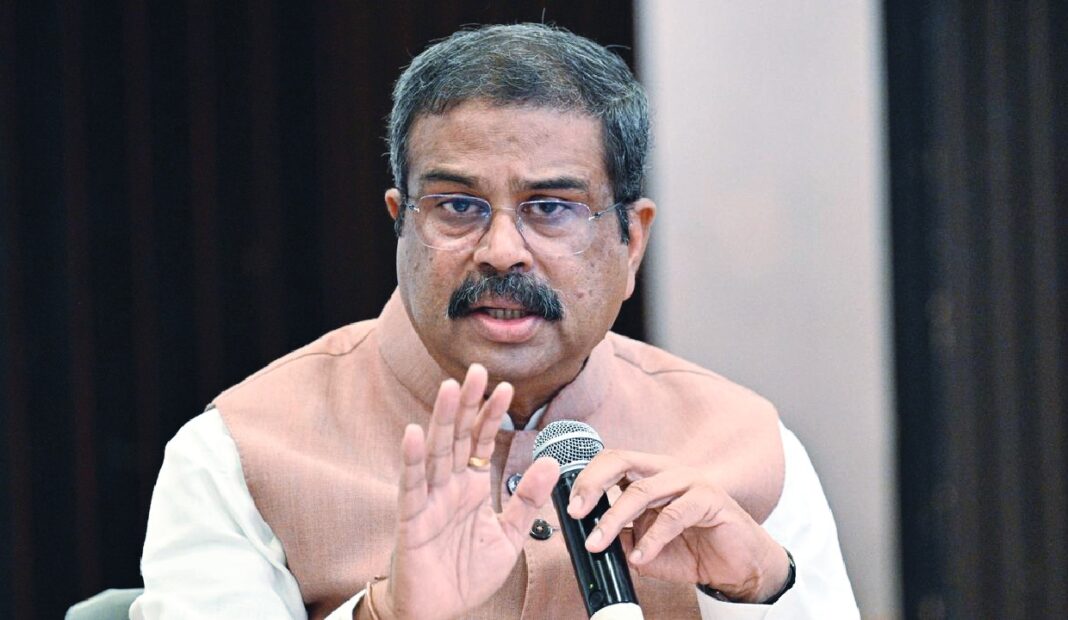
The recent concerns over NEET paper leaks and recurring questions regarding examination integrity have once again placed Union Education Minister Dharmendra Pradhan in the political firing line. The opposition wants his resignation. Activists demand accountability. Students want answers.
But here is the uncomfortable truth: sacking Dharmendra Pradhan is not the solution.
Removing one minister may satisfy political appetites and create headlines for a few news cycles, but it will not solve the structural weaknesses that allow paper leaks, examination fraud, and institutional failures to occur. India does not suffer from a Dharmendra Pradhan problem. India suffers from a systems problem.
The real question is not whether a minister should resign. The real question is why paper leaks continue to occur despite decades of experience, technological advancements, and multiple governments promising reform.
India conducts some of the largest examinations in the world. NEET alone determines the future of lakhs of aspiring doctors. CBSE examinations influence the academic trajectory of millions of students. The scale is massive, the stakes are enormous, and the opportunities for corruption are equally significant.
When an examination paper leaks, it’s often a result of a chain of vulnerabilities, including printing facilities, transportation networks, and technology gaps.
Changing the minister does not break that chain. Breaking the chain requires reforming the entire examination ecosystem.
The first solution is complete digitisation of examination logistics.
India has demonstrated through Aadhaar, UPI, DigiLocker, and GST that it can build world-class digital infrastructure at scale. The same capability must now be applied to examinations. Question papers should be encrypted digitally and transmitted securely to authorised centres only hours before the examination begins. Multi-layer authentication systems should ensure that no single official can access the paper independently.
Every access point must leave a digital footprint.
If India can securely handle billions of financial transactions daily through UPI, it can certainly secure examination papers that are distributed only a few times a year.
The second solution is decentralised question paper generation.
Currently, paper leaks become catastrophic because a single leaked paper affects the entire examination process. Technology now allows the creation of multiple equivalent question sets generated from a central question bank using artificial intelligence and algorithmic randomisation.
Different regions or examination centres could receive different but equally balanced papers.
This would make large-scale leaks nearly impossible because obtaining one paper would not compromise the entire examination.
The third solution is treating examination fraud as organised crime.
Paper leaks are not harmless academic misconduct. They destroy careers, create unfair advantages, undermine public trust, and damage national meritocracy.
The individuals involved are often part of organised networks that operate across states and exploit vulnerable students and desperate parents.
India needs dedicated examination integrity units comprising cyber experts, intelligence officers, forensic investigators, and law enforcement agencies working together. Fast-track courts should hear examination fraud cases. Convictions should be swift. Penalties should be severe.
A student who studies honestly for years should never lose opportunities because a criminal syndicate sold question papers to a privileged few.
The fourth solution is greater accountability at every administrative level.
Whenever a leak occurs, investigations tend to focus on political responsibility while operational responsibility escapes scrutiny. Who handled the papers? Who transported them? Who had access?Who failed to follow protocol? Who ignored warning signs?

Accountability must move downward through the chain of command and not merely upward toward the minister.
India cannot build efficient institutions if responsibility always becomes political but never administrative.
The fifth solution concerns CBSE and the broader culture of examinations.
The obsession with a single high-stakes examination creates enormous pressure on students, parents, and institutions. It also creates incentives for fraud.
India must continue moving towards multi-dimensional assessment systems that evaluate students over time rather than placing their entire future on a single examination day.
The National Education Policy has already initiated discussions around holistic assessment, skill-based learning, and reducing rote memorisation. These reforms must accelerate.
A student should be judged by consistent performance, aptitude, skills, and practical competence – not merely by one three-hour examination.
The sixth solution is public transparency.
Whenever irregularities occur, institutions must communicate quickly and honestly. Delayed responses create rumours. Rumours create panic. Panic destroys confidence.
Students deserve timely updates, transparent investigations, and clear explanations.
Trust is built through openness, not silence. Most importantly, India must recognise that examination integrity is a national security issue.
A nation that cannot guarantee fairness in education cannot guarantee fairness in opportunity.
Meritocracy is one of India’s greatest strengths. Every year, millions of young Indians from modest backgrounds compete through examinations to improve their lives. Their faith in the system is sacred.
When a paper leak occurs, it is not merely a bureaucratic failure. It is a betrayal of that faith.
This is why the debate must move beyond personalities.
Today it is Dharmendra Pradhan. Tomorrow it could be another minister. The day after, another government.But unless the structural weaknesses are addressed, the headlines will remain the same.
India has already demonstrated that it can solve seemingly impossible challenges. We have built the world’s largest digital identity platform. We have created a payment system admired globally. We conducted elections involving hundreds of millions of voters with remarkable efficiency.
Surely, a nation capable of these achievements can secure its examination system.
The students of India deserve better than political theatre. They deserve solutions. They deserve technology-driven safeguards.They deserve transparent institutions.They deserve strict enforcement against examination mafias.And above all, they deserve a system where hard work matters more than connections, corruption, or criminal networks.
Sacking Dharmendra Pradhan may satisfy the anger of the moment.Fixing the system will protect the future of generations. India should choose the latter in my humble opinion.
If the agenda is merely to sack Dharmendra Pradhan and not to stop paper leaks, then India is not solving the problem – it is simply changing the face associated with it. Another minister will come, another controversy might erupt, and another round of outrage will follow. Meanwhile, the real culprits and systemic weaknesses will remain untouched.
The tragedy is that every paper leak destroys the dreams of honest students, shatters the confidence of parents, and pushes vulnerable children into anxiety, depression, and in some cases, even suicide. Unless we focus on securing examinations, dismantling paper leak mafias, and reforming the system, the cycle of leaks, protests, resignations, and heartbreak will continue.