


Key Takeaways
- The Global Terrorism Index recorded over 5,500 deaths in 2025, highlighting the lethal impact of Islamic Radicalism.
- In Iraq, ISIS displaced three million people and caused $45.7 billion in damage, crippling the non‑oil economy.
- Muslim societies must lead the fight against radicalism, leveraging their own intellectual and demographic strengths.
There is an uncomfortable truth that the Muslim world must confront: Islamic radicalism has destroyed more Muslim societies than it has ever liberated. The greatest victims of jihadist extremism are not Christians, Jews, Hindus or Westerners. They are overwhelmingly Muslims themselves.
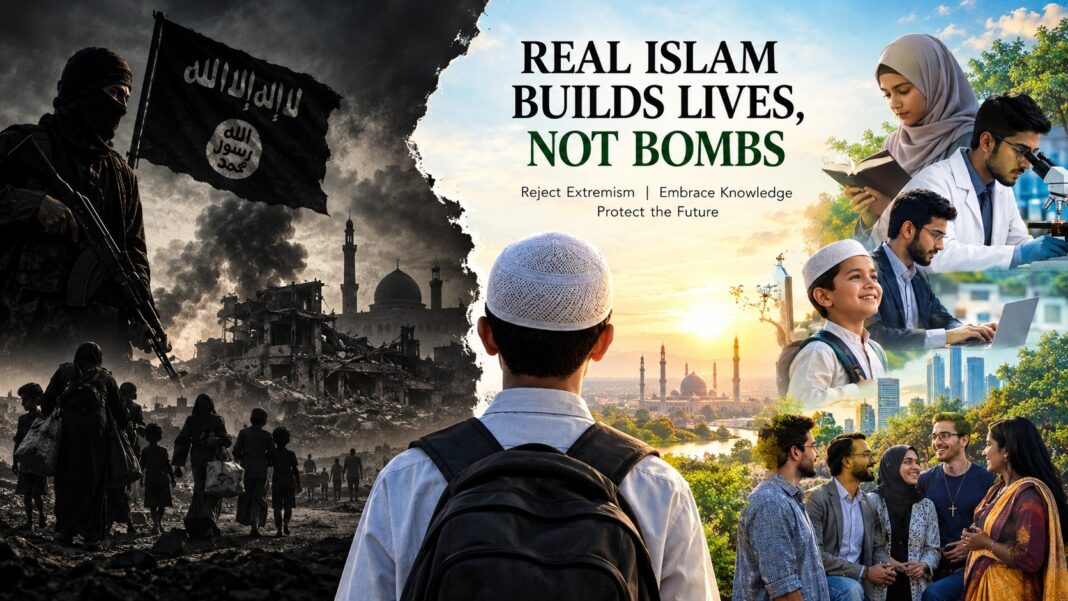
This is not an argument against Islam. It is precisely the opposite. It is an argument that Muslims who believe in the dignity, wisdom and spiritual traditions of Islam must reclaim their faith from movements that have converted religion into an ideology of political domination, violence and perpetual war.
The distinction is critical: Islam is a religion; Islamic radicalism is a political and violent interpretation of religion. One cannot condemn an entire faith because of the actions of extremist organisations. But neither should the Muslim world shy away from acknowledging the extraordinary damage done by groups claiming to act in Islam’s name.
The data are devastating.
The 2026 Global Terrorism Index recorded 5,582 terrorism deaths globally in 2025. Islamic State and its affiliates remained the world’s deadliest terrorist organisation. The other three deadliest organisations were Jamaat Nusrat Al-Islam wal Muslimeen (JNIM), Tehrik-e-Taliban Pakistan (TTP) and al-Shabaab – all Islamist extremist organisations operating primarily in Muslim-majority environments.
That statistic should provoke a profound question inside the Muslim world: Why are so many of the societies suffering from violent Islamist extremism Muslim societies themselves?
Look at Iraq.
Iraq was once one of the Arab world’s great centres of civilisation, education, commerce and culture.
Then came decades of dictatorship, war, sectarian conflict and eventually the rise of Islamic State. The ISIS conflict alone produced more than three million internally displaced people and inflicted an estimated $45.7 billion in physical damage.
By 2017, cumulative losses to Iraq’s non‑oil economy were estimated at approximately $107 billion. The World Bank estimated that reconstruction requirements were around $100 billion over a decade.
Who ultimately paid that bill? Not ISIS. Ordinary Iraqis paid it.
Muslim families lost homes. Muslim children lost schools. Muslim workers lost jobs. Muslim communities were displaced. Muslim businesses disappeared. Mosques themselves became targets or instruments of sectarian mobilisation.
The same tragedy unfolded in Syria.
The Syrian war became a battlefield involving the Assad regime, opposition forces, ISIS, jihadist organisations, regional powers and international militaries. The result was catastrophic. The World Bank estimates that Syria’s real GDP contracted by more than 50 percent between 2010 and 2022, while more than half of the country’s pre-war population has been displaced. By 2024, GNI per capita had fallen to only $830 and around one-quarter of Syrians were living in extreme poverty.
The destruction was not merely physical. It destroyed human capital, institutions, businesses, families and social trust.
That is the real weapon of radicalism: it destroys the future.
Afghanistan offers another devastating example. For decades, extremist violence and militant politics have prevented the country from establishing the stable institutions necessary for sustained development. Pakistan has simultaneously suffered from the violence of organisations such as the TTP. In 2025 alone, the TTP was responsible for hundreds of deaths, with security forces constituting its primary target category.
Somalia has endured decades of violence associated with al-Shabaab. The Sahel has experienced an extraordinary expansion of jihadist violence involving organisations such as JNIM and Islamic State affiliates.
The geographical pattern should make Muslims uncomfortable – but also determined.
Radicalism does not merely attack foreign enemies. It consumes the society that produces it.
This is why Muslims themselves must become the strongest opponents of Islamic radicalism.
The answer cannot simply be Western military intervention. Nor can it be governments suppressing dissent in the name of counter-terrorism. Nor can it be another cycle of bombs, invasions and occupations.
The answer must ultimately come from within Muslim societies.
The Muslim world possesses an enormous intellectual, economic and demographic resource. More than 1.8 billion people identify as Muslim. The overwhelming majority are not terrorists. They are parents, teachers, entrepreneurs, scientists, soldiers, doctors, farmers, workers, artists and students trying to build ordinary lives.

They should not allow a tiny minority of extremists to define Islam for the world.
The challenge is therefore ideological as much as military.
Radical organisations succeed when they convince young people that violence is heroic, martyrdom is preferable to education, religious purity requires hatred of the “other”, and political disagreement constitutes apostasy.
That narrative must be defeated. And it cannot be defeated merely by governments. It must be challenged in mosques, schools, universities, families, media organisations and digital platforms.
A young Muslim should hear from an imam that becoming an engineer, doctor, entrepreneur or teacher can be a greater contribution to humanity than becoming a militant. He should learn that intellectual inquiry is not apostasy. He should understand that disagreement does not make another Muslim an enemy. He should know that Christians, Jews, Hindus, Buddhists and people of no faith are human beings deserving dignity.
The Quranic and Islamic intellectual traditions contain enormous resources for such a project. The Muslim world does not need to abandon Islam to defeat radicalism. It needs to prevent radicalism from hijacking Islam.
This is where Muslim intellectuals, scholars and political leaders have a historic responsibility.
Silence is not neutrality when extremists are destroying your civilisation.
If a mosque is attacked by extremists, Muslims must condemn it.
If a Muslim is murdered because another Muslim declares him an apostate, Muslims must condemn it.
If a schoolgirl is prevented from receiving education because extremists claim education violates religion, Muslims must condemn it.
If a terrorist organisation kills civilians while shouting “Allahu Akbar”, Muslims must be among the first to say: That is not my Islam.
The distinction between Islam and Islamism must therefore become clearer in global discourse.
At the same time, Muslim-majority governments must understand that extremism thrives in environments of institutional weakness, unemployment, exclusion and political failure. UNDP research on violent extremism emphasises that security responses alone are insufficient and that development, governance and locally rooted prevention strategies matter.
The broader development evidence is equally powerful. The World Bank says economies affected by conflict and instability have fallen dramatically behind: since 2020, their per-capita GDP has contracted by an average of 1.8 percent annually, compared with 2.9 percent growth in other developing economies. In 2025, 421 million people in conflict-affected economies were living below $3 a day.
That is the economic dividend of perpetual conflict: poverty.
Radicalism promises glory and delivers unemployment. It promises paradise and leaves behind rubble. It promises dignity and produces refugees. It promises Islamic civilisation and destroys universities, hospitals, markets, infrastructure and institutions. This is the fundamental contradiction Muslims must confront.
The future of the Muslim world cannot be built on a permanent state of jihad against everyone who is different. It must be built on education, innovation, science, entrepreneurship, constitutional governance, economic opportunity and peaceful coexistence.
The Arab Human Development Reports have repeatedly highlighted the importance of accountable governance, inclusive societies, human security and economic opportunity in overcoming the structural challenges confronting the region.
The Muslim world therefore faces a historic choice. It can allow extremists to continue claiming ownership of its religious identity. Or it can reclaim that identity.
Muslims must fight Islamic radicalism – intellectually, politically, socially and, where necessary, through legitimate security institutions.
Not because Islam is weak. Because Islam is strong enough to reject those who use its name to justify hatred.
The greatest victory over Islamic radicalism will not be another battlefield victory over a terrorist organisation. It will be the day when a Muslim child in Baghdad, Damascus, Kabul, Mogadishu or any other conflict-affected society grows up believing that his future lies not in picking up a gun, but in picking up a book, building a business, becoming a scientist, serving his community and living peacefully with people of another faith.
Radicalism has already taken enough from the Muslim world. It is time for Muslims to take their future back.