


Why do some people recover against all odds? Can our beliefs, emotions, and consciousness influence the body’s ability to heal? Drawing on over three decades of experience in medicine, research and medical innovation, internationally trained ophthalmologist and author, Dr. Dinesh Verma explores these questions in his fourth book, ‘The Self-Cure Code: How Consciousness, Dreams, Belief, and Genes Converge to Heal’ (Readomania).
The book draws on scientific research, epigenetics, the placebo effect and Indian philosophy to explore how the mind and body are connected in the healing process. It also weaves in Dr. Verma’s personal experiences of family illness, grief, loss, and spiritual growth, bringing together science, consciousness and the human experience of healing.
Part memoir, part scientific exploration and part spiritual quest, ‘The Self-Cure Code’ invites readers to consider a profound question: Could the key to understanding healing lie in the complex relationship between our biology, beliefs and consciousness?
Dr. Dinesh Verma is an internationally trained ophthalmologist, researcher, educator, and author with over three decades of experience across medicine, science, and technology. Trained at AIIMS, New Delhi, and institutions in the UK and US, he has held key clinical and academic positions, contributing to advancements in retinal care, virtual reality simulation, and medical innovation.
Beyond medicine, his interests span artificial intelligence, genetics, mind-body healing, meditation, spirituality, and human consciousness. Now based in Goa, he devotes his time to writing and exploring the connections between science, belief, and healing.
‘The Self-Cure Code’ (Readomania), his fourth book, combines personal reflections with scientific inquiry to examine the relationship between consciousness, genes, beliefs, and the body’s healing potential.
Dr. Dinesh Verma is an internationally trained ophthalmologist, researcher, educator, and author with over three decades of experience across medicine, science, and technology. Trained at AIIMS, New Delhi, and institutions in the UK and US, he has held key clinical and academic positions, contributing to advancements in retinal care, virtual reality simulation, and medical innovation.
Beyond medicine, his interests span artificial intelligence, genetics, mind-body healing, meditation, spirituality, and human consciousness. Now based in Goa, he devotes his time to writing and exploring the connections between science, belief, and healing.
To explore the connection between mind, body, and healing, Sonakshi Datta of GoaChronicle put up a few questions for Dr. Dinesh Verma.
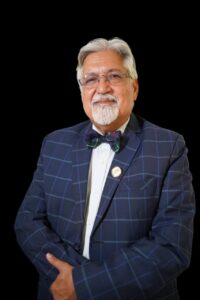
‘The Self-Cure Code’ Author Dr. Dinesh Verma

How would you describe the ‘How’ behind the connection between the mind and the body in the process of healing?
The mind and body are not two separate entities; they are two expressions of the same living system. Our thoughts, emotions, and beliefs influence our nervous system, hormones, and immune responses, which, in turn, affect our physical health. Emerging science, particularly epigenetics, is helping us understand how our environment and lifestyle can influence the way our genes function, the way they can be switched on and off, the way the interpretation of the blue print in the DNA can be changed by the mind.
The ‘how’; is the real insight in my book ‘The Self-Cure Code’, where I explore how changing our inner world, alongside appropriate medical care, can create a more favourable environment for healing.
How do you think one could intensify the mind’s conviction to heal physically?
Conviction begins with hope, but it grows through understanding, consistent practice, and personal experience. Meditation, mindfulness, positive beliefs, physical activity, good nutrition, and meaningful relationships can help us move from a state of chronic stress towards greater balance and resilience. I believe the key is to stop seeing ourselves merely as passive recipients of treatment and become active participants in our healing. This is not about wishing a disease away; it is about harnessing the mind’s potential to support the body’s natural capacity to heal.
What were the most profound lessons you learned from the healing journeys of patients that could help someone on their own self-healing journey?
Perhaps the most profound lesson is that healing is not always the same as curing, and the human capacity to heal and adapt can surprise us. It is like the difference between pain and suffering in Buddhist philosophy. Every patient is different, but hope, emotional resilience, a sense of purpose and the support of loved ones can make a meaningful difference to the healing journey. I have also learnt that we must look beyond the disease to understand the person experiencing it. Self-healing does not mean fighting illness through willpower alone or abandoning conventional medicine. It means bringing together the best of modern medicine with the healing potential of the mind, lifestyle and human connection.
What makes The Self-Cure Code a must-read for all, from all walks of life?
Because health is not merely the absence of disease; it is also about how we think, live, relate to others and find meaning in our lives. Drawing on my experience as a medical doctor, a surgeon, and my exploration of the mind-body connection, the book invites readers to reconsider the relationship between their consciousness, beliefs, genes and wellbeing. Whether we are concerned about ageing, diabetes, heart disease, cancer, or simply living a healthier life, the message is universal: we may not control every illness that comes our way, but we can learn to influence how we live, respond, and participate in our own healing. ‘The Self-Cure Code’ is an invitation to move from fear to understanding, from passivity to participation, and from merely surviving to living more consciously.