


Key Takeaways
- The BJP’s ‘washing machine’ metaphor underscores claims of cleansing sins of corrupt politicians.
- Brinda Karat accuses the NDA of aligning with agencies like the Enforcement Directorate and the Central Bureau of Investigation.
- Debate over the Uniform Civil Code raises concerns about women’s rights and personal law reforms.
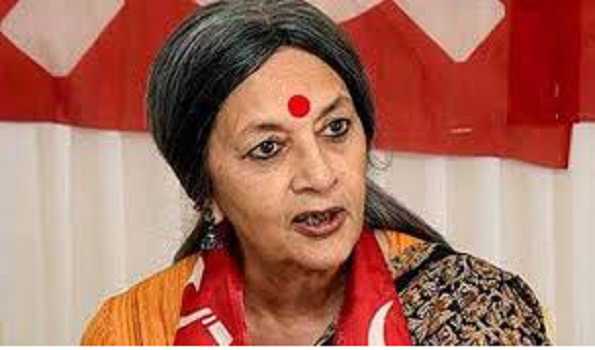
Nagpur: Commenting on the recent political development in Maharashtra, senior CPI-M leader Brinda Karat said BJP’s ‘washing machine’ cleaning sins of corrupt politicians.
Highlighting the BJP’s alliance with political leaders, Karat said the BJP in Maharashtra has embraced those they once labelled as the most corrupt.
The party now supports figures previously deemed the most corrupt across the state.
BJP is the only party in the entire country which can produce such a washing machine that it washes off the sins of every single one who says “Jai Modi “.
Referring to the current political scenario in Maharashtra, the former Rajya Sabha member said the state is being marred by the politics of dirty money, the influence of agencies such as the Enforcement Directorate (ED), Central Bureau of Investigation (CBI) and Income tax (IT) and added that BJP’s hypocritical policies prioritising power over principles.
Launching a salvo at the BJP, Ms Karat said the main allies of the National Democratic Alliance (NDA) were the ED, CBI and Income tax.
“These factors has negatively impacted the political climate in Maharashtra”, the CPI(M) Senior leader further said.

She also warned that BJP would soon face internal turmoil in Maharashtra.
Speaking on the issue of the Uniform Civil Code (UCC), Karat accused the government of sidelining the 21st Law Commission‘s report on the matter.
She alleged that the government’s stance on the UCC was driven by a ‘uniform communal agenda’ of Prime Minister Narendra Modi and that implementing means to hinder the equal rights of women under their respective personal laws.
The 21st Law Commission had suggested corrective measures in personal laws through consultations with community leaders, Karat claimed.
Criticising the UCC, Brinda Karat stated that it would not lead to equal rights for women as it would require ending the personal laws that currently provide protections and rights specific to different communities.
She emphasised that true gender equality could only be achieved by respecting and enhancing the rights granted under personal laws.