
Key Takeaways
- Goa’s taxi trap: Are we driving backwards into the 19th century?
- The Goa government’s decision to ban app-based taxi aggregators has sparked a debate on progress vs tradition.
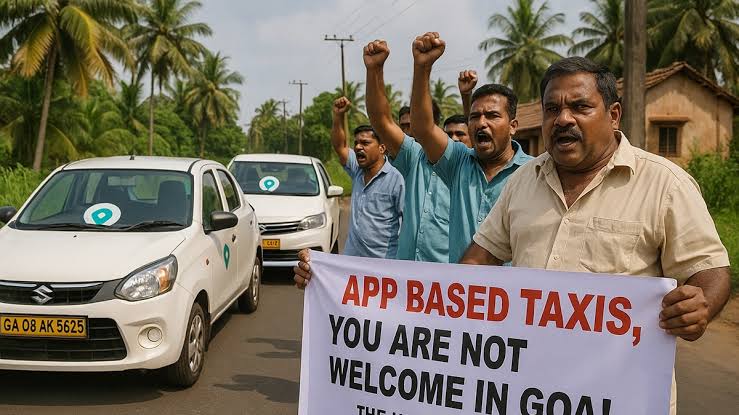
- Taxi drivers in Goa are resisting the implementation of app-based taxi aggregators, demanding feudal privilege and opposing technology.
- The consequences of refusing modern transport options in Goa are dire, with tourists facing the same nightmare every year – finding reasonably priced, dependable transport.
There comes a time in a state’s journey when its political leadership must decide whether it wants to be liked or it wants to be respected. Goa, my beloved land, has reached such a crossroad yet again — and this time, the battleground is the road itself. The Chief Minister of Goa has reassured local taxi drivers that app-based aggregators like Ola and Uber will not be allowed to operate in the state. And in doing so, the government may have just signaled that Goa prefers to live in the 19th century, while the rest of India — and the world — races ahead into the 21st.
Let me be blunt — this is not about supporting or opposing Goan taxi drivers. This is about progress versus paralysis. About whether we, as a state, wish to embrace technology or continue to kneel before tantrums dressed as tradition.
The taxi unions in Goa are no longer demanding fair treatment — they are demanding feudal privilege. It began with the refusal to use digital meters. Then came resistance to the state-run “GoaMiles” app. And now, there’s an outright rejection of any taxi aggregation system that operates with accountability, transparency, and competition. The latest assertion from taxi operators that “we do not want any taxi apps” is not just regressive — it is arrogant.
Why should a small group of individuals, however vocal, dictate how the rest of the state’s residents and tourists travel? Why should digital transparency and pricing efficiency be held hostage to the whims of a few unions?
A democratically elected government must listen to its people, yes — but it must not become a puppet in the hands of pressure groups. When governance gives way to appeasement, the state begins its slow but sure slide into chaos.
Taxi operators claim they’re protecting local livelihoods, but scratch deeper and you’ll find hypocrisy. They charge exorbitant fares, refuse short-distance trips, and rarely follow customer service ethics. In the name of being local, they’re keeping Goa’s tourism and mobility sectors hostage.
Meanwhile, across India, from Kashmir to Kanyakumari, technology-based aggregators like Ola, Uber, Rapido, and others operate with functional success. Not perfect — but far better than what Goa suffers. In Mumbai, Delhi, Bangalore, or Hyderabad, app-based taxis coexist with traditional systems, offering citizens and tourists choice, transparency, safety, and affordability.
Why can’t that be true for Goa?
Why must Goa always be the exception — not in excellence, but in dysfunction?
Every year, over 80 lakh tourists visit Goa. And every year, they face the same nightmare — finding reasonably priced, dependable transport. Do we expect a foreigner or even a domestic tourist from Mumbai to haggle with a taxi driver in sweltering heat for a ride from the airport to their hotel? Do we honestly believe that refusing modern transport options improves Goa’s global image?
The truth is, tourists don’t mind paying — they mind being fleeced. They mind being trapped. They mind being given no options.
What’s most disappointing is not that taxi drivers are opposing technology. That’s expected — those who benefit from opacity will always resist transparency. What is truly disheartening is that the Goa government has bent to their demands, rather than standing firm.

You give in once, they come back louder. You give in twice, they bring more demands. That is exactly what is happening now.
Goa needs leadership, not lip service. The CM’s assurances to taxi unions may have calmed the noise for now, but it has sent a terrible message: if you shout loud enough, the government will fold.
What’s next? Should we stop digitizing government records because some clerks don’t want to learn computers? Should we ban online hotel bookings because local guesthouses want to keep their ledgers under wraps?
Appeasement is not governance. It is abdication.
As a Goan, as an entrepreneur, and as someone who has traveled extensively across India and abroad — I say this with utmost love for my land: Goa deserves better. Goans deserve better.
We deserve the right to book a cab from our phone without worrying about being overcharged.
We deserve a system where taxi drivers are treated with dignity, but also held accountable.
We deserve a Goa where tradition and technology coexist — not where one suffocates the other.
And let’s not even get started on the economic opportunity. App-based taxi services bring not just convenience but jobs, data-backed urban planning, and tourism support. Refusing this evolution is like throwing away a smartphone because you prefer a rotary dial.
It is time for the Goa government to wield the iron fist — not to suppress, but to restore order. It must implement app-based taxi services. It must enforce digital meters. It must regulate taxi pricing. And it must do all of this not in confrontation with taxi drivers, but with dialogue and deadlines.
Reform is never easy — but regression is a disaster. Goa cannot afford to be India’s backward exception. The world is watching. And if we don’t move forward now, we will be left behind permanently.
In the end, this is not just about taxis. This is about whether Goa chooses to be a progressive state or a prisoner of its own fear. The answer, my fellow Goans, should be obvious.