

Key Takeaways
- The IIT Mandi team uncovered how mosquito eggs use polyamines and high‑calorie lipids to survive drying.
- Understanding the desiccation tolerance pathway opens avenues for innovative vector control strategies.
- The findings may extend to agricultural pests, offering eco‑friendly solutions for sustainable farming.
Mandi(HP): Researchers from Indian Institute of Technology Mandi and the Institute for Stem Cell Science and Regenerative Medicine in Bengaluru, have discovered the biochemical processes that enable the eggs of the Dengue-causing mosquito to survive harsh conditions and rejuvenate when favourable conditions return.
This research marks a significant stride in our battle against mosquito-borne diseases, offering hope for more effective vector control measures. The details of this research have been published in the journal PLOS Biology. The paper was co-authored by Dr Baskar Bakthavachalu, Assistant Professor, School of Biosciences and Bioengineering, IIT Mandi along with Ms. Anjana Prasad, Ms. Sreesa Sreedharan, and Dr. Sunil Laxman from Institute for Stem Cell Science and Regenerative Medicine (DBT-inStem).
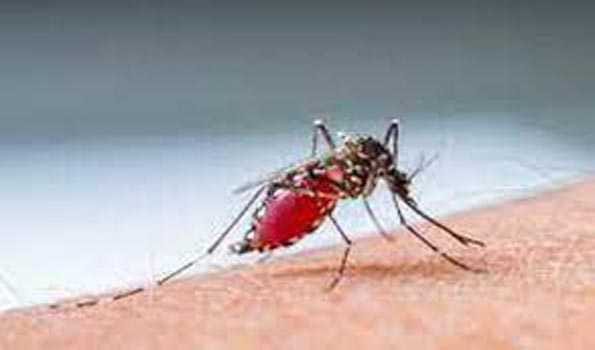
Mosquitoes, viral vectors for various diseases, deposit their eggs in water, where they hatch.
The eggs of Dengue and Zika‑carrying Aedes mosquitoes can endure extended periods without water, akin to plant seeds patiently waiting for germination in the absence of moisture.
Despite the knowledge of this phenomenon, the molecular reasons behind the desiccation tolerance and post‑rehydration survival remained a mystery until now.

The collaborative team reared Aedes aegypti mosquitoes, studying their eggs through a series of innovative experiments. By subjecting the eggs to dehydration and subsequent rehydration, they discovered that the developing larvae undergo specific metabolic changes required for survival.
Dr Baskar Bakthavachalu, the lead researcher from IIT Mandi, explained, “Life is fundamentally dependent on water. However, extreme environmental conditions have allowed organisms to find ways to survive without water. Each of these organisms finds its own unique way to overcome water loss. Our understanding of this fundamental process remains limited. Mosquito eggs, facing drying conditions, enter an altered metabolic state to significantly increase the production of polyamines, which play a crucial role in enabling the embryos to withstand the damage caused by water loss. Furthermore, they utilize high-calorie lipids as an energy source to complete their development once they are rehydrated.”
The implications of this research are far-reaching. Understanding these survival mechanisms provides a foundation for innovative mosquito control strategies. By disrupting the desiccation tolerance of mosquito eggs, researchers anticipate a significant reduction in mosquito populations and disease transmission. The understanding gained from this work could potentially prevent the resurgence of mosquitoes following monsoon rains, a period traditionally associated with increased disease transmission risks.
The knowledge gained has applications beyond disease control. Similar pathways exist in agricultural insect pests, suggesting potential solutions for agricultural challenges. By deciphering these biochemical processes, scientists may pave the way for eco-friendly, targeted pest control measures, ensuring sustainable agricultural practices.