


Key Takeaways
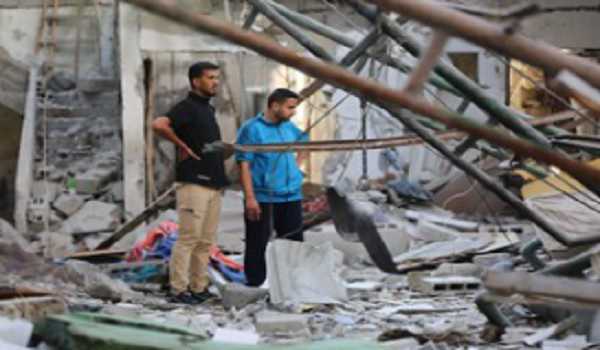
- The latest Israeli strikes in Gaza have killed and injured dozens of people.
- The UN is working to provide humanitarian aid, including food, water, and medical aid, to affected communities in Gaza.
- The fuel shortage in Gaza continues to impact essential service providers, including hospitals, ambulances, and bakeries.
United Nations: The latest strikes across Gaza reportedly killed and injured dozens of people, and one attack was uncomfortably close to the UN operations base, UN humanitarians said on Tuesday.
The UN Office for the Coordination of Humanitarian Affairs (OCHA) said one of the multiple strikes across Gaza occurred just a few hundred meters from the UN Joint Humanitarian Operations Centre.
OCHA said UN agencies and non-governmental organizations use the base located in Deir al Balah to coordinate work throughout the Gaza Strip.
On the displacement side, humanitarians report families continue to move from Gaza City to Deir al Balah, with more than 1,000 people observed crossing in just the past week.

The displaced families travel mainly on donkey carts, but also use cars and tuk-tuks. They carry only a few belongings and have been displaced multiple times, making it difficult for them to afford another displacement.
“These people are among the most vulnerable, and our teams have been deployed daily along their displacement routes to provide basic life-saving assistance, such as water, hot meals, food parcels, and health and nutrition support,” OCHA said.
The humanitarians said the lack of electricity and fuel continues to impact essential service providers, including hospitals, ambulances, bakeries and aid trucks. Over the past two weeks, the United Nations has collected an average of about 80,000 liters of fuel per day, up from about 45,000 liters per day in the last two weeks of June.
“While this represents an improvement, the requirement for the most basic humanitarian operations stands at 400,000 liters per day, and the Israeli authorities are still not allowing the allocation of fuel to key local humanitarian responders, preventing them from transferring supplies within Gaza,” OCHA said.