



Key Takeaways
- Cutting down trees for infrastructure development poses a significant threat to the environment, leading to habitat destruction and loss of biodiversity.
- The eco-friendly paradox highlights the contradiction between promoting green initiatives and expanding our urban footprint.
- Reforestation efforts can help mitigate the effects of deforestation, but they do not completely offset the environmental damage.
The Hasdeo forests, located in Chhattisgarh, India, are rich in biodiversity and home to various tribal communities. The proposed axing of over 270,000 trees is part of coal mining projects, which have sparked widespread protests and legal battles. Environmentalists argue that deforestation at this scale will lead to habitat destruction, loss of biodiversity, and adverse effects on the climate.
In the Great Nicobar region, the plan to cut down 964,000 trees is part of a large-scale development project, which includes a transshipment port, an international airport, and a power plant. This project is intended to boost economic growth and strategic importance in the region. However, it poses a threat to the pristine tropical forests, which are home to endemic species and indigenous tribes. Deforestation could lead to significant ecological damage, including soil erosion, disruption of water cycles, and loss of biodiversity.
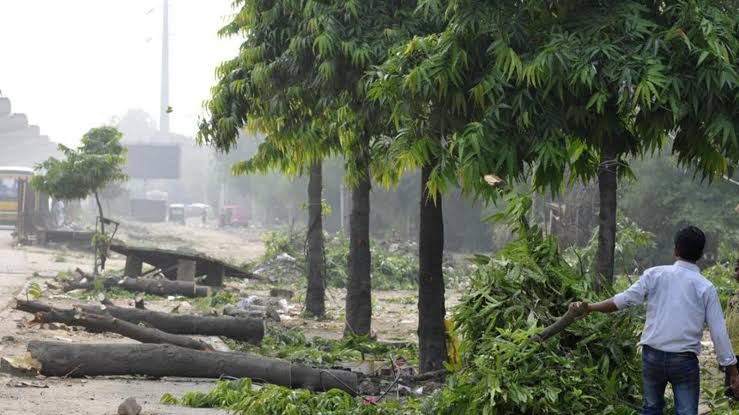
In our quest for modernity and progress, few things symbolize the march toward a better future more poignantly than the sound of chainsaws and the sight of falling trees. It is with a heavy heart and a heavy ax that we must confront the delicate balance between environmental sensitivities and the irrefutable necessity of cutting trees for infrastructure development. Yes, while we diligently propagate environmental awareness and the dire need to combat climate change, it is equally crucial to acknowledge the paramount importance of clearing forests to pave the way for roads, buildings, and urban jungles. After all, who needs trees when you can have concrete and asphalt?
The Road to Progress is Paved with Tree Stumps
Nothing screams progress quite like a new highway slicing through a once-pristine forest. The trees, standing tall and defiant for centuries, are mere obstacles in the path of civilization. The need for seamless transportation is an indisputable argument; after all, how else would we get from our eco-friendly homes to the nearest organic market if not via a freshly paved highway that obliterated an ancient woodland? The irony, of course, is not lost on us that these very markets sell products that preach sustainability and environmental consciousness. Yet, the roads leading to them tell a different story.
Urbanization: The Ultimate Environmental Sacrifice
The cities of tomorrow must rise today, and this means cutting down the inconvenient forests that stand in the way. Skyscrapers, malls, and residential complexes are the altars at which we sacrifice our trees. Urbanization is an unstoppable force, and trees, despite their silent protests, must bow out gracefully. We plant saplings in concrete pots on our balconies as a token gesture to Mother Nature, while bulldozers clear acres of green for another mega-mall. This juxtaposition of actions is a testament to our commitment to progress while maintaining an appearance of environmental concern.
Jobs vs. Jungle: The Economic Imperative
Economic growth and employment generation are often cited as justifications for deforestation. The argument goes that infrastructure projects create jobs, boost the economy, and improve living standards. Indeed, the logic is compelling: the trees might provide oxygen, shade, and habitat, but they do not pay taxes or contribute to the GDP. The workers who build highways, bridges, and industrial parks do. It is an ironic twist of fate that we must destroy the very resources that sustain life to ensure the survival of our economic system. The narrative of development is thus one where trees are the silent casualties in the battle for prosperity.
Technological Marvels vs. Natural Wonders
Human achievement is often marked by technological marvels. Towering skyscrapers and sprawling airports are a testament to our engineering prowess. However, this comes at the cost of natural wonders, like the humble beauty of trees. We celebrate our technological advancements while undermining the natural world that inspired them.

The Eco-Friendly Paradox
In the age of climate change awareness, the paradox of cutting trees for infrastructure development is stark. We preach the importance of reducing our carbon footprint while simultaneously expanding our urban footprint. Solar panels and wind turbines sprout on lands where forests once stood, presenting an ironic twist to our green initiatives. The green energy revolution, while commendable, often comes at the cost of green landscapes. We must ask ourselves: can we truly call our advancements eco-friendly if they come at such a high environmental price?
The Tokenism of Reforestation
To mitigate the guilt of deforestation, we turn to reforestation efforts with fervor. The logic is simple: for every tree cut, plant a new one. But here lies the irony—newly planted saplings take decades to mature and cannot replace the ecological richness of the ancient forests they replace. The tokenism of reforestation is a salve for our conscience, not a solution for our environmental woes. The cycle of destruction and half-hearted restoration continues unabated, each new project leaving behind a trail of environmental debt.
The Silent Voices of Nature
Trees, unlike humans, do not have a voice to protest their demise. They stand silently as the chainsaws roar and the bulldozers advance. Their importance is acknowledged in speeches and environmental pledges, but their sacrifice is often deemed necessary for the greater good. The irony is poignant: we advocate for the preservation of nature in conferences held in sprawling convention centers built on cleared land. The silent voices of nature are drowned out by the cacophony of progress.
A Future Paved with Good Intentions
As we look to the future, the irony of our actions becomes ever clearer. We aim for a world where technology and nature coexist harmoniously, yet our current trajectory suggests otherwise. Cutting trees for infrastructure development, while beneficial in the short term, may leave a legacy of environmental degradation. It is a bittersweet realization that our pursuit of modernity and progress comes at the cost of the very environment we seek to protect.
The Ironic Dance of Progress and Preservation
The satire of cutting trees for infrastructure development amidst our cries for environmental sensitivity and climate change mitigation is a stark reminder of the complex interplay between progress and preservation. The irony is palpable: we destroy what we seek to protect in the name of advancement. It is a dance of contradictions, where the pursuit of a better future often undermines the very foundations of that future. As we move forward, perhaps it is time to rethink our approach, to find a balance that truly honors both progress and the environment. Until then, the chainsaws will continue to roar, and the trees will continue to fall, silent witnesses to the irony of human ambition.