



Key Takeaways
- The nearest star—the Sun—provides a detailed view of stellar processes that can be applied to distant stars.
- ISRO’s Aditya-L1 satellite will monitor solar flares, coronal mass ejections, and solar wind to improve space‑weather predictions.
- Understanding the Sun’s thermal and magnetic phenomena helps protect spacecraft, communication networks, and astronaut health.
- Studying our dynamic Sun offers insights into the behavior of stars across the Milky Way and other galaxies.
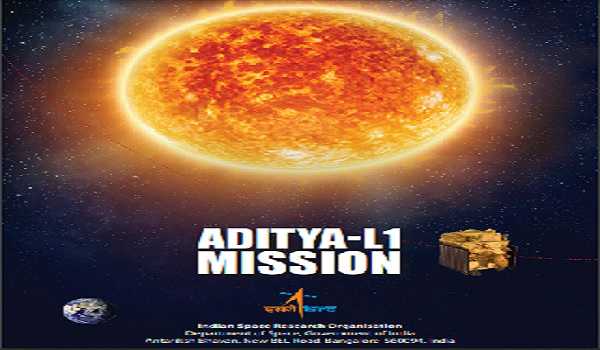
Chennai: The Indian Space Research Organisation (ISRO) which is gearing up for its first Solar exploratory mission to study the dynamic sun with the planned Aditya-L1 satellite using PLSV in the coming days, said the study of the sun was to know about stars in
various other galaxies.
ISRO said The sun is the nearest star and therefore can be studied in much more detail as compared to other stars.
“By studying the sun we can learn much more about stars in our Milky Way as well as about stars in various other galaxies”, it said.
“The sun is a very dynamic star that extends much beyond what we see. It shows several eruptive phenomena and releases immense amount of energy in the solar system. If such explosive solar phenomena is directed towards the earth, it could cause various types of disturbances in the near earth space environment”, it said.

It said various spacecraft and communication systems are prone to such disturbances, so an early warning of these events is crucial for taking corrective measures beforehand.
In addition, if an astronaut is directly exposed to explosive phenomena, he/she would be in danger. The Sun’s extreme thermal and magnetic phenomena are of great scientific interest.
Thus, the sun also provides a good natural laboratory to understand those phenomena which could not be directly studied in the lab.