


Key Takeaways
- The Aditya-L1 spacecraft will travel to a halo orbit around the Lagrange point L1 for continuous solar monitoring.
- Positioning at the L1 point provides an uninterrupted view of the Sun, crucial for real‑time space‑weather forecasts.
- ISRO plans to launch the mission on a PSLV rocket from Sriharikota, marking a major step in India’s solar research capabilities.
Chennai: After the moon, the Indian Space Research Organisation (ISRO) is eyeing for landing in the most challenging surface of the hottest Sun, the nearest start and the largest object in the Solar system.
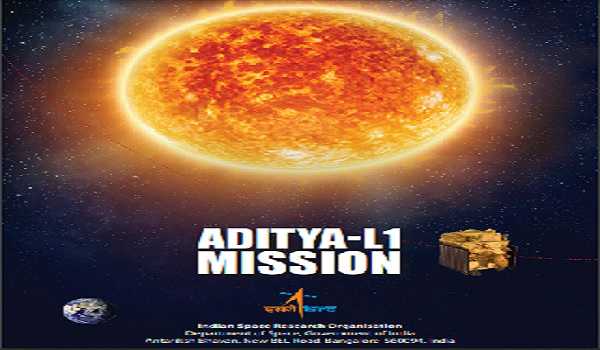
The Space Agency is gearing up for the launch of Aditya-L1 Solar Exploratory mission to study the Sun.
The Aditya-L1 mission will be launched by ISRO PSLV rocket from Sathish Dhawan Space Centre SHAR (SDSC SHAR), Sriharikota.
Subsequently, the orbit will be made more elliptical and later the spacecraft will be launched towards the Lagrange point L1 by using on-board propulsion.

A satellite placed in the halo orbit around the L1 point has the major advantage of continuously viewing the Sun without any occultation/eclipses. This will provide a greater advantage of observing the solar activities and its effect on space weather in real time.
As the spacecraft travels towards L1, it will exit the earths’ gravitational Sphere of Influence (SOI).
After exit from SOI, the cruise phase will start and subsequently the spacecraft will be injected into a large halo orbit around L1.
The total travel time from launch to L1 would take about four months for Aditya-L1.