



Key Takeaways
- The Australian government pledged $100 million to launch the new hydrogen hub at Port Bonython.
- The hub aims to produce 1.8 million tons of hydrogen annually by 2030, positioning Australia as a future low‑emissions hydrogen exporter.
- State and federal leaders say the project will create thousands of jobs and accelerate South Australia’s renewable energy sector.
Canberra: Australia’s Prime Minister (PM) has announced funding to build a new hydrogen hub in South Australia (SA), according to an official statement.
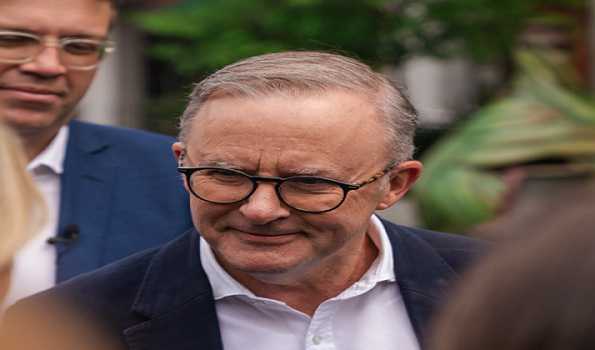
Australian PM Anthony Albanese and Peter Malinauskas, the Premier of SA, on Monday committed a combined 100 million Australian dollars (64.2 million U.S. dollars) in funding to develop the Port Bonython Hydrogen Hub near the industrial town of Whyalla, more than 200 km north of Adelaide.
The hub is expected to generate up to 1.8 million tons of hydrogen annually by 2030 and host projects worth up to 13 billion Australian dollars (8.3 billion U.S. dollars).
“We’re working to develop the Port Bonython Hydrogen Hub, which will support regional jobs and take us a step closer to becoming a renewable energy superpower,” Albanese said in a joint statement with Malinauskas.
“The global shift to clean energy and decarbonised economies is a huge economic opportunity for Australia. We are determined to grasp this opportunity and are investing half a billion dollars into regional hydrogen hubs all around Australia.”

Of the funding announced on Monday, 70 percent will be provided by the federal government. Additional private sector funds will also be poured into the project.
According to the International Energy Agency‘s 2022 World Energy Outlook, Australia is expected to become the world’s second-largest net exporter of low-emissions hydrogen by 2030 and the largest by 2050.
The federal government projects the industry could be worth 50 billion Australian dollars (32.1 billion U.S. dollars) annually by 2050.
“Our state is blessed with the key ingredients the world needs to decarbonise international economies – abundant coincident wind and solar resources, critical minerals, strong renewable energy penetration, and well developed industrial hubs,” Malinauskas said in the joint statement.
“We’re working closely with industry to maximise this opportunity to grow a new industry, which has potential to create thousands of jobs and improve the standard of living for South Australians for generations to come.”