


Key Takeaways
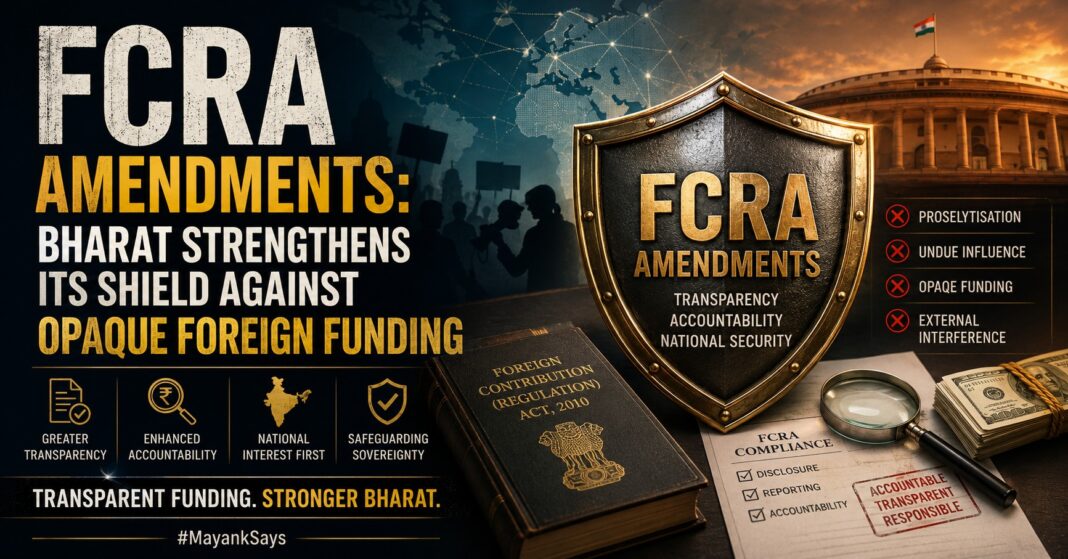
- Key Takeaway 1: Bharat’s FCRA amendments aim to enhance transparency and accountability in foreign funding.
- Key Takeaway 2: The amendments require organisations to clearly specify the purpose of foreign funds and declare States and Union Territories where funds will be used.
- Key Takeaway 3: The government’s broader objective is to ensure that foreign contributions are not used for activities inconsistent with India’s legal framework or national interests.
The Government of Bharat has significantly strengthened the Foreign Contribution (Regulation) Act (FCRA) framework through a fresh set of amendments aimed at enhancing transparency, accountability and oversight of foreign funding received by non-governmental organisations (NGOs) and associations. The amendments also define permissible religious activities more precisely and tighten compliance obligations for organisations receiving foreign contributions.
Far from being a routine regulatory exercise, these amendments reflect a broader strategic objective: ensuring that foreign contributions entering Bharat are used exclusively for legitimate developmental, educational, charitable and humanitarian purposes, and do not become instruments of undue external influence on the country’s democratic processes, public discourse or national security.
Key Changes
The amended rules require organisations seeking FCRA registration or prior permission to clearly specify the exact purpose for which foreign funds are being sought by selecting from a predefined list of approved activities. They must also declare the States and Union Territories where the funds will be utilised, allowing greater monitoring of fund deployment.
The eligibility norms relating to foreign nationals serving as office bearers have been tightened, while disclosure requirements have been expanded to include additional details regarding organisational structure, governing body, websites, social media accounts and foreign donors.
One of the most significant changes is the explicit clarification that proselytisation (religious conversion) is not a permissible faith-based activity for receiving foreign contributions under the FCRA framework. Documentation, reporting and compliance requirements have also been strengthened to improve traceability and accountability.
Why These Amendments Matter
These changes have not emerged in isolation.
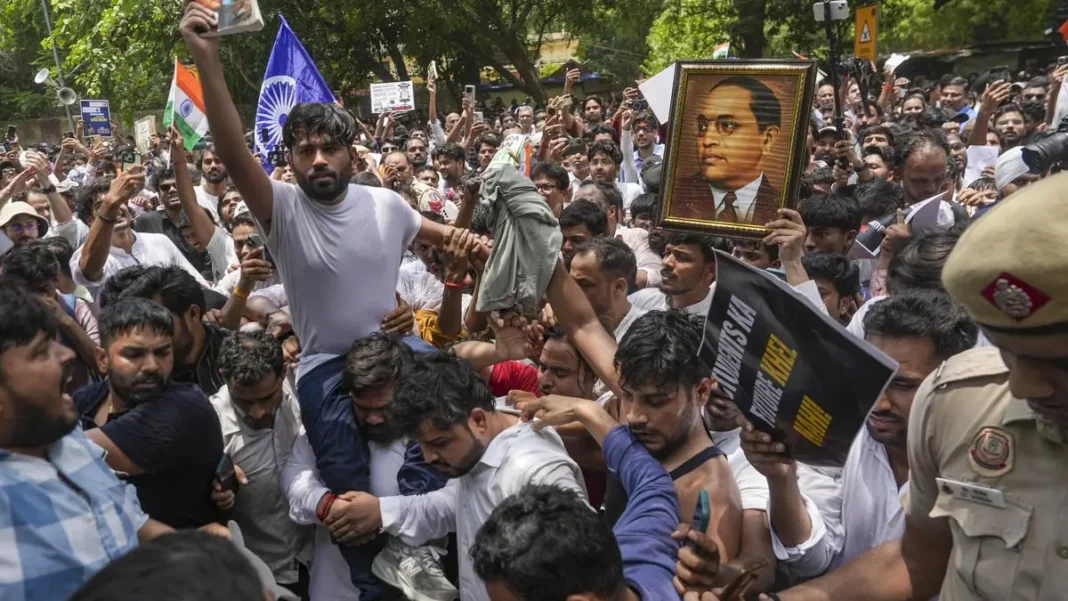
Over the past decade, Bharat has witnessed major public mobilisations, including the Shaheen Bagh protests, the farmers’ protests and, more recently, the protests led by the Cockroach Janata Party (CJP). Alongside debates over the issues themselves, there have been recurring allegations and official scrutiny regarding the role of certain foreign-funded organisations and international advocacy networks in influencing narratives around some protest movements.
The concerns extend beyond protests.
Governments and security agencies have expressed concern over the use of foreign funding by some organisations engaged in religious activities in tribal regions and parts of the North East, where conversions have remained a subject of political, legal and social debate. More recently, similar concerns have also been voiced in relation to parts of Punjab, prompting calls for closer scrutiny of the sources and utilisation of overseas funding. The government’s broader objective, reflected in the amended rules, is to ensure that foreign contributions are not used for activities inconsistent with India’s legal framework or national interests.

Seen together, these developments explain why the government has sought to close potential loopholes by making it significantly more difficult for organisations to receive and utilise foreign funds without clearly declaring their purpose, operational geography, governance structure and funding sources.
The Strategic Dimension
Modern geopolitical competition extends far beyond conventional military confrontation. Influence today is exercised through information campaigns, digital ecosystems, advocacy networks, think tanks, financial flows and non-state actors. Hybrid warfare increasingly relies on shaping narratives, mobilising opinion and influencing domestic institutions rather than using conventional force alone.
Many democracies, including the United States through the Foreign Agents Registration Act (FARA), have enacted laws to regulate foreign influence and overseas funding. Bharat’s evolving FCRA framework reflects a similar determination to ensure that foreign money entering the country remains transparent, accountable and aligned with national interests.
None of this diminishes the valuable work performed by thousands of NGOs in education, healthcare, disaster relief, rural development and social welfare. Their contribution remains indispensable. The challenge for policymakers is to strike the right balance, facilitating genuine charitable work while ensuring that foreign financial flows cannot be misused for purposes inconsistent with the nation’s constitutional framework, sovereignty and security.
Conclusion
The latest amendments to the FCRA Rules represent another significant step in strengthening Bharat’s regulatory architecture governing foreign contributions.
As Bharat’s geopolitical stature grows, so too will attempts by external actors to shape narratives and influence domestic discourse. Transparency in foreign funding is therefore no longer merely an administrative requirement; it has become an important pillar of national governance and sovereign decision-making.
The success of these reforms will ultimately depend on balanced implementation, protecting legitimate civil society initiatives while ensuring that every foreign contribution remains transparent, accountable and fully compliant with the laws of Bharat.
#MayankSays