
Key Takeaways
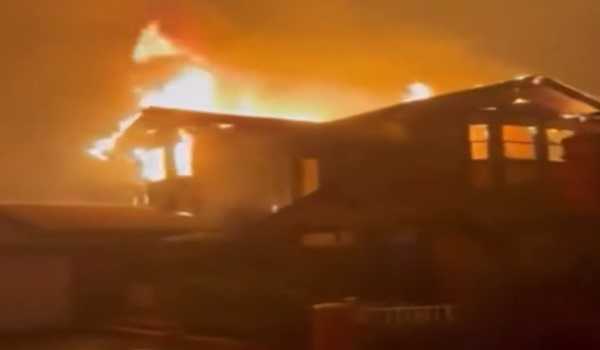
- The Palisades Fire and Eaton Fire are two of the most destructive wildfires in Los Angeles County history, with thousands of structures destroyed or damaged.
- Nearly 180,000 people have been forced to flee their homes due to the wildfires in Los Angeles County, with many more at risk.
- The combination of low humidity, dry fuels, and shifting winds has heightened the potential for spot fires and rapid expansion, posing significant challenges to firefighting efforts.
Los Angeles: Fierce wildfires continue to burn in the greater Los Angeles area on Thursday, killing at least five people and forcing nearly 180,000 people fleeing their homes.
Five active fires in Los Angeles County have grown to more than 29,000 acres (about 117.3 square kilometers).
The two biggest ones, Palisades Fire and Eaton Fire, both started on Tuesday, spread to 17,234 acres (about 69.7 square kilometers) and 10,600 acres (about 42.9 square kilometers), respectively, as of Thursday morning with zero containment, according to the California Department of Forestry and Fire Protection (CAL FIRE).
The Palisades Fire destroyed a total of 300 structures, while over 13,300 structures were in danger of being destroyed. The fire’s rapid spread and high risk of spot fires have posed significant challenges to firefighting efforts.
CAL FIRE warned extreme fire behavior, including both short- and long-range spotting, continues to pose significant challenges to firefighting efforts for the Palisades Fire.

Wind gusts of up to 60 miles per hour are forecasted to persist in the area through Thursday.
Los Angeles Fire Department Chief Kristin Crowley said on Thursday the Palisades Fire is one of the “most destructive” natural disasters in the history of Los Angeles.
Multiple structures have been damaged or destroyed as the wind-driven Eaton brush fire continues.
Red Flag high wind conditions are expected to continue until Thursday evening.
The combination of low humidity, dry fuels, and shifting winds has heightened the potential for spot fires and rapid expansion, according to CAL FIRE.