


Key Takeaways
- The first unmanned Gaganyaan test (TV‑D1) successfully demonstrated the crew escape system.
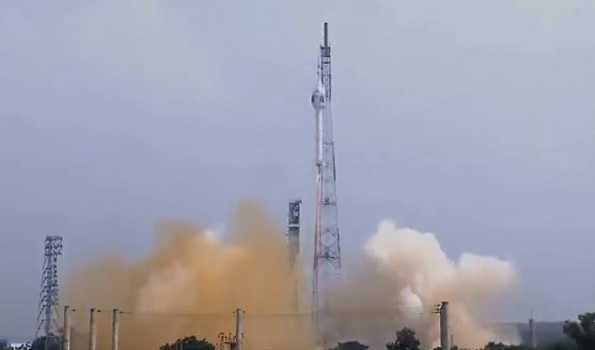
- A brief weather‑related delay was resolved, and the rocket lifted off from the First Launch Pad at Sriharikota.
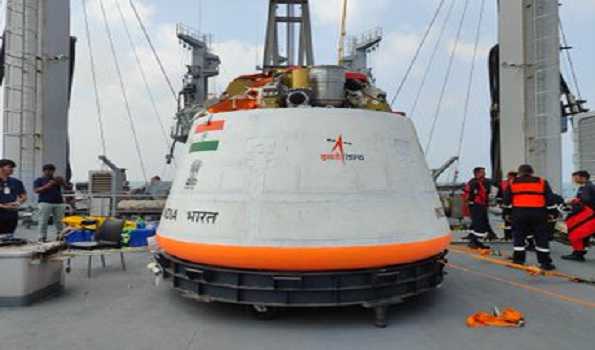
- The crew module safely splashed down in the Bay of Bengal and was recovered by the Indian Navy for data analysis.
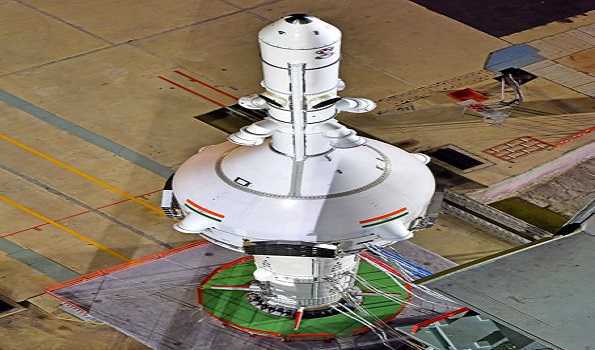
Sriharikota (Andhra Pradesh): After an initial technical glitch, the India’s Space Odyssey took a giant leap forward on Saturday whe the first unmanned developmental Flight Test Vehicle Abort Mission-1 (TV-D1) to demonstrate the crew escape system for the Gaganyaan programme was successfully accomplished from the SHAR Range here.
“TV D1 Test Flight is accomplished. Crew Escape System performed as intended”, ISRO said.
“Mission Gaganyaan gets off on a successful note”, it added.
This critical phase marked the beginning of preparations, heralding the first step closer to India’s first Human Space Mission as it comes in the backdrop of the successful launch of the third lunar mission Chandrayaan-3 that soft landed in the Moon’s South Polar Region and the Solar exploratory Adiitya-L1 mission spacecraft.
After a smooth 12.5 hr countdown that began at 7:30 pm on Friday night, the TV‑D1 encountered a brief hold.
The rocket failed to lift off from the First Launch Pad at 08:45 hrs after a 45‑minute delay caused by inclement weather, which prevented engine ignition. The mission was temporarily called off, but the anomaly was quickly identified and rectified, allowing a successful launch later.
Fresh dates will be announced once the system is fully validated.

However, the anomaly was quickly identified and rectified and the mission took place and accomplished successfully.
Announcing the mission’s success later, Dr Somanath said: “The TV-D1 mission was to demonstrate the crew escape system for Gaganyaan.”
He said the parachutes opened and the crew module touch down on the Bay of Bengal at the required velocity.
The crew module will be recovered from the sea by the Indian Navy ship and brought to the Chennai Port. The Indian space agency will then study the data.
On the initial glitch, he said owing to the weather and poor visibility conditions the launch, which was originally scheduled at 8 a.m., was postponed to 8.45 a.m.
And just five seconds before the lift off from the first launch pad, the computer systems held back the rocket from lifting off due to a non-conformance in the system.
Dr Somanath said, the issue was identified and sorted out quickly. The rocket was filled with gases and then the mission took place and accomplished successfully as planned, he added.