


Key Takeaways
- Israel has begun a new offensive on Gaza City, with the Israeli military calling up tens of thousands of reservists to take part in the impending military operation.
- The Israeli military may face a manpower problem due to the repeated calls for reserve troops to serve in Gaza City, which could lead to burnout and attrition among the troops.
- The Israeli military has shown little willingness to punish or prosecute those who decline or otherwise avoid the call to serve in Gaza City.
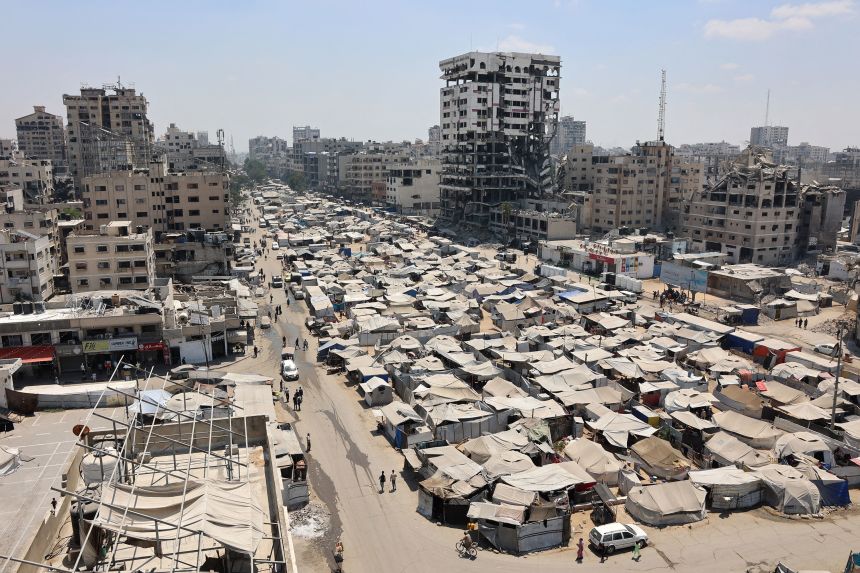
Jerusalem: As the earliest stages of a massive assault on Gaza City take shape, Israel is calling up tens of thousands of reservists to take part in the impending military operation.
The takeover and occupation of the largest city in northern Gaza, which Israel’s Prime Minister Benjamin Netanyahu said was one of the last Hamas strongholds, will require the military to bring in 60,000 more reserve troops and extend the service of another 20,000, reports CNN.
The Israeli military is already on the outskirts of Gaza City, Israel Defense Forces (IDF) spokesman Brigadier General Effie Defrin said Wednesday, in what he described as the first steps of the larger operation.
The security cabinet first approved the takeover of Gaza City, which could take five months or more, according to Israeli officials. But on Wednesday, Netanyahu instructed the military to shorten the timeline.
After nearly two years of war, and with no end in sight amid the next major operation, Israel’s military chief warned of the added burden on the troops, many of whom have been called up multiple times to fight in Gaza.
IDF Chief of Staff Lt Gen Eyal Zamir told the security cabinet earlier this month that the military faced attrition and burnout, but his concerns were dismissed as Netanyahu and his coalition partners pushed ahead with the new war plans.
A new survey from the Agam Labs at the Hebrew University of Jerusalem found that 40% of soldiers were less motivated to serve, while 13% were more motivated, highlighting the challenges facing the Israeli military. The findings underscore the stark reality facing Israel’s military, which could face limits to its manpower, especially as polls have repeatedly shown an overwhelming majority of the country supports an end to the war.
Military leaders have called for the government to draft ultra-Orthodox men into service to supplement the beleaguered troops. But the vast majority of the ultra-Orthodox community has refused to serve, and at their demand, the government is pushing a broad exemption to mandatory military service. That this political debate is happening in the midst of war has only stoked the anger of many of those who serve.
After the security cabinet approved the new operation, a small reservist organization in Israel renewed calls for soldiers to decline military orders to serve.

“Your children do not know how to refuse on their own, because it is difficult. It is almost impossible,” Soldiers for Hostages said on social media earlier this month.
Other reservist organizations have not publicly advocated for open refusal, which is more likely to be a private decision not to serve.
The IDF does not publish the numbers or percentages of reservists who do not show up when called.
The Israeli military has a relatively small active-duty force, comprised mostly of conscripts. To continue fighting the country’s longest war ever, Israel has to rely on reservists.
But it’s not clear what percentage will answer a new round of calls to serve inside Gaza once again, especially after the military chief warned the operation could endanger the soldiers and the hostages.
Defrin, the military spokesman, tried to address those concerns Wednesday, saying at a press conference that the IDF uses “intelligence and many other capabilities” to protect the lives of the hostages. But all he could promise was that “we’ll do our best not to harm the hostages.
Reserve call-up notices are mandatory for many, but after sending numerous reservists into Gaza multiple times, the military has shown little willingness to punish or prosecute those who decline or otherwise avoid the call.
In an interview in February of last year, Netanyahu had promised more than a year ago that the worst of the fighting would be over by now. However, 18 months later, Netanyahu says a new operation is the fastest way to end Israel’s longest war.