


Tehran: Iran confirmed on Wednesday the “unconditional” end of the restrictions imposed by the United Nations Security Council (UNSC) on its missile-related activities, while the United States imposed new sanctions on the same day on Tehran’s missile and drone programs.
In a statement published on its website, the Iranian Foreign Ministry said, “Today, the last part of the anti-Iran restrictions, including assets freeze and financial restrictions on certain Iranian individuals and entities, imposed for years by the UNSC in the areas related to missile activities and exchange of relevant services and technologies, were terminated unconditionally.”
The statement warned that any action aiming to impose sanctions or restrictions on Iran’s defense interactions and cooperation is now in contradiction with the termination of the restrictions under UNSC Resolution 2231, stressing Iran’s right to implement the necessary measures to safeguard its national interests.
However, on the same day, the U.S. took a series of measures to imply that Iran’s missile program would remain sanctioned even after the expiration of the UNSC restrictions.
Washington on Wednesday announced new sanctions on a group of people and firms over alleged links to Iran’s ballistic missile and drone programs.

Furthermore, in a statement published on its website on Tuesday, the European Council said it “decided to take the necessary steps to maintain the restrictive measures under the EU non-proliferation regime on Iran.”
“The council evaluated that there are valid reasons to refrain from lifting these restrictions on Transition Day (Oct. 18, 2023), as originally foreseen under the Joint Comprehensive Plan of Action (JCPOA),” it added.
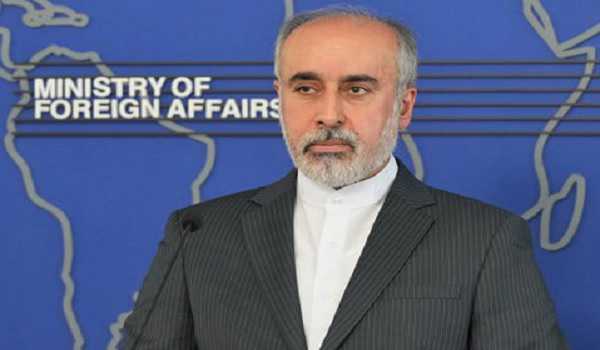
On the same day, Iranian Foreign Ministry Spokesman Nasser Kanaani denounced the European Council’s decision as “unilateral, illegal and politically unjustifiable.”
Iran signed a nuclear deal, formally known as JCPOA, with world powers in July 2015, agreeing to put some curbs on its nuclear program in return for the removal of sanctions on the country. The U.S., however, pulled out of the deal in May 2018 and reimposed its unilateral sanctions on Tehran, prompting the latter to drop some of its nuclear commitments under the deal.
The talks on the revival of the JCPOA began in April 2021 in Vienna, Austria. Despite several rounds of talks, no significant breakthrough has been achieved since the end of the last round in August 2022.