
Key Takeaways
- Film pedagogy has the potential to transform India’s education system by providing a more engaging and effective way of learning.
- India’s film industry is a rich repository of educational storytelling opportunities, with a diverse range of languages, cultures, and narratives.
- Film pedagogy can help to address the country’s large and diverse education system, and provide a more inclusive and accessible way of learning.
India stands today at a unique intersection of history, demography, culture, and technology. We are the world’s most populous nation, home to the largest youth population, one of the largest education systems, and the most prolific film industry on the planet. Yet, despite possessing these unparalleled strengths, India has not fully explored the transformative potential of one powerful medium that naturally connects all three – film pedagogy.
As India aspires to become a developed nation by 2047, the centenary year of our Independence, I believe the time has come for India to take global leadership in advocating the use of films as an educational tool and to position film pedagogy as an integral component of modern learning.
For decades, education across the world has been largely dependent on textbooks, examinations, and rote learning. While these methods have their place, they often fail to engage the imagination, emotions, and creativity of students. Research consistently demonstrates that visual storytelling significantly improves comprehension, retention, empathy, and critical thinking. Human beings are natural storytellers and story listeners. Films bring together image, sound, emotion, culture, and narrative in a manner that few other mediums can.
India understands storytelling better than perhaps any other civilisation.
From the Mahabharata and Ramayana to the Panchatantra and Jataka Tales, storytelling has always been central to how India transmitted values, knowledge, ethics, and wisdom across generations. Cinema is merely the modern evolution of that timeless tradition.
India’s film industry is a multilingual and culturally diverse entity, producing more films annually than any other country. Bollywood and regional cinema alike contribute to this rich tapestry, offering a wealth of educational storytelling opportunities.
At the same time, India’s education system is among the largest on Earth. More than 250 million students attend schools across the country, while millions more are enrolled in higher education institutions. No nation has a larger classroom waiting to be inspired.
The question before us is simple: Why should films remain confined to entertainment when they can also become instruments of education, character building, and nation-building?
Film pedagogy does not mean replacing teachers with screens. It means empowering teachers with a medium that speaks the language of today’s generation.
A lesson on climate change becomes more meaningful when students watch the environmental consequences unfold through cinematic storytelling. A history lesson becomes more engaging when students experience historical events visually. Concepts such as empathy, social harmony, constitutional values, gender respect, innovation, leadership, entrepreneurship, and national integration can be understood far more effectively when students see human stories rather than merely read abstract concepts.
The National Education Policy 2020 rightly emphasises experiential learning, critical thinking, creativity, multidisciplinary approaches, and holistic education. Film pedagogy aligns perfectly with these objectives. It transforms passive learning into active engagement.
Moreover, India possesses another strategic advantage – the world’s largest young population. Nearly two-thirds of India’s population is below the age of 25. This generation consumes visual content more than any generation before it. Digital platforms, OTT services, smartphones, and social media have fundamentally changed how young minds access information.
Education must evolve to meet learners where they are.
If today’s students learn through visual engagement, then educational systems must incorporate visual learning tools. Film pedagogy provides precisely that bridge between traditional education and contemporary learning behaviour.
There is also an important economic dimension to this vision.
India’s creative economy is emerging as a major growth sector. Encouraging educational filmmaking can create new opportunities for filmmakers, writers, educators, animators, researchers, historians, and digital content creators. A robust ecosystem of educational cinema can generate employment while simultaneously contributing to national learning outcomes.

Imagine an India where every school has access to a curated library of educational films aligned with curriculum objectives. Imagine documentaries on science, innovation, agriculture, governance, entrepreneurship, environmental sustainability, and Indian civilisation being produced in every major Indian language. Imagine students from Kashmir to Kanyakumari learning through stories that inspire curiosity rather than fear examinations.
The benefits extend beyond our borders.
India has often spoken of becoming a Vishwaguru – a teacher to the world. Film pedagogy presents a practical opportunity to demonstrate that aspiration.
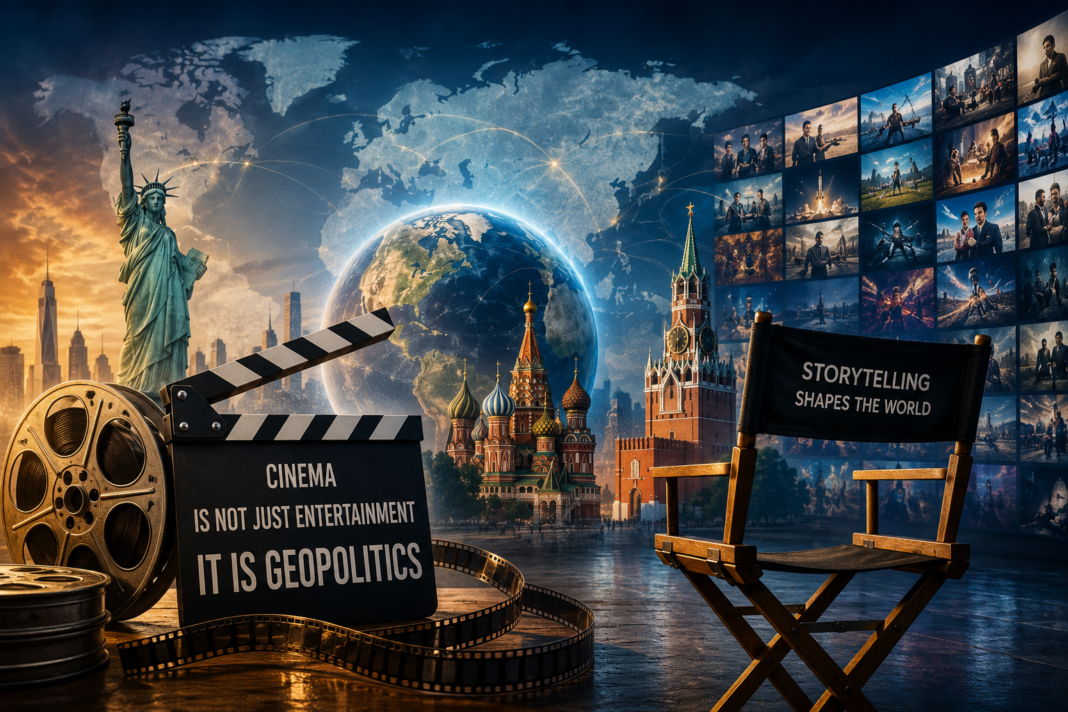
Countries such as South Korea have successfully used films and popular culture to expand their global influence. Hollywood has long served as a powerful instrument of American soft power. Turkey has used television dramas to strengthen cultural connections across continents.
India possesses an even richer civilisational heritage and a far larger storytelling tradition.
By championing film pedagogy internationally, India can create a new model of educational diplomacy. Indian educational films can be shared across Asia, Africa, Latin America, and other developing regions facing similar educational challenges. Through cinema, India can export not merely entertainment but knowledge, values, innovation, and human development.
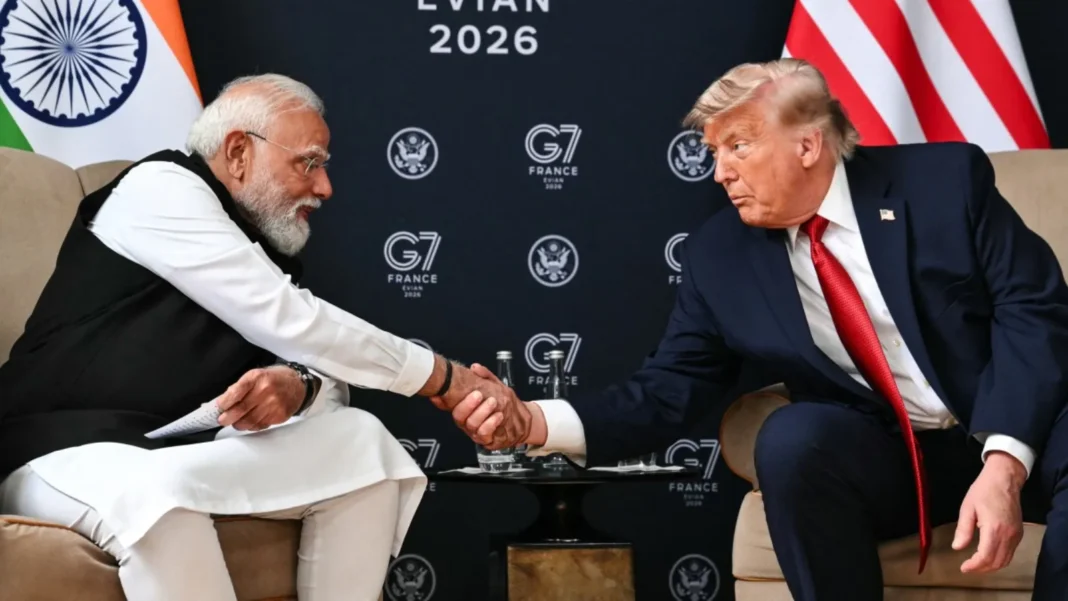
Prime Minister Modi, throughout your leadership, you have emphasised the importance of innovation, technology, digital transformation, and youth empowerment. Initiatives such as Digital India, Skill India, Startup India, and the National Education Policy have demonstrated a willingness to rethink traditional systems for a new era.
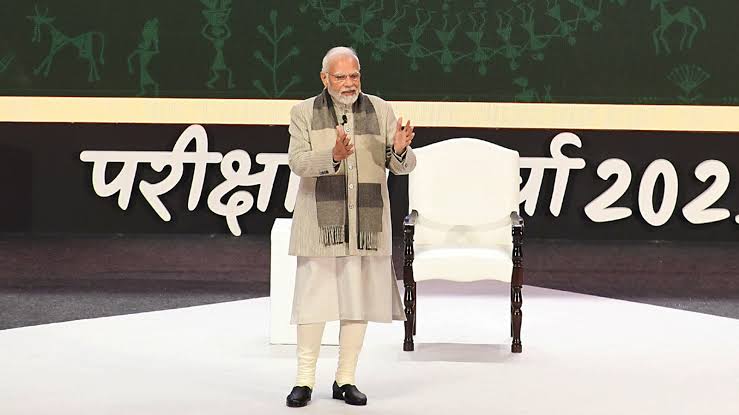
Your own unique initiative, Pariksha Pe Charcha, has already demonstrated the power of communication beyond textbooks. Through direct interaction with students, parents, and teachers, you have consistently emphasised that education is not merely about marks, examinations, and rankings, but about learning, confidence, curiosity, and personal growth. The overwhelming response to Pariksha Pe Charcha reflects a growing recognition that young minds learn best when knowledge is delivered in an engaging, relatable, and emotionally resonant manner. Film pedagogy builds upon the very philosophy that Pariksha Pe Charcha promotes – reducing academic stress, encouraging holistic development, and making learning a meaningful experience rather than a mechanical pursuit of examination scores. By integrating cinematic storytelling into education, India can further advance the vision of creating confident, creative, and emotionally resilient learners.
Film pedagogy deserves similar attention.
India could establish a National Film Pedagogy Mission bringing together educators, filmmakers, psychologists, curriculum experts, technology providers, and policymakers. Universities could introduce specialised programmes in educational filmmaking. Film festivals focused on educational cinema could be encouraged. International collaborations could position India as the global hub for research and innovation in film-based learning.
Most importantly, India could lead global discussions on how cinema can contribute to education, peace, cultural understanding, and human development.
The twenty-first century will not be defined solely by technological advancement. It will also be defined by how effectively nations educate their young citizens to think, empathise, innovate, and lead.
India already possesses the world’s largest youth audience, one of the world’s largest education systems, and the world’s most vibrant film industry.
Rarely does history present a nation with all the ingredients required to lead a global movement. India has those ingredients today.
The world is searching for new educational models that are engaging, inclusive, and future-ready. Film pedagogy offers one such model, and India is uniquely positioned to champion it.
As we move towards 2047, let India not merely participate in the future of education. Let India define it.