

Key Takeaways
- The National Cooperative Policy 2025 aims to revive and modernise the cooperative sector in India.
- The policy aims to make cooperative institutions inclusive, manage them professionally, and create large-scale employment and livelihood opportunities especially in rural India.
- The policy has been prepared by a 48-member national-level committee headed by former Union Minister Suresh Prabhakar Prabhu.
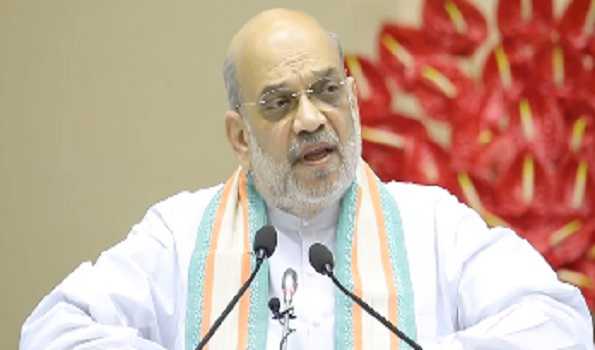
New Delhi: Union Home Minister and Minister of Cooperative Amit Shah will announce the National Cooperative Policy 2025 here on Thursday.
The new cooperative policy will prove to be a milestone in the cooperative movement of India for the next two decades from 2025-45, an official statement said here today.
The new cooperative policy 2025 aims to revive and modernise the cooperative sector as well as realise the vision of prosperity through cooperation by creating a roadmap at the grassroots level.
In 2002, the country’s first National Cooperative Policy was issued, which gave a basic framework for better management of the economic activities of cooperative institutions. In the last 20 years, many major changes have taken place in the society, country and the world due to globalization and technological advancement. Keeping these changes in mind, it became necessary to formulate a new policy, so that cooperative institutions can be made more active and useful in the current economic scenario and the role of the cooperative sector can be strengthened in achieving the goal of “Viksit Bharat 2047”.

The objective of the National Cooperative Policy is to make cooperative institutions inclusive, manage them professionally, prepare them for the future and be able to create large-scale employment and livelihood opportunities especially in rural India.
A 48-member national-level committee headed by former Union Minister Suresh Prabhakar Prabhu has prepared the new National Cooperative Policy. This committee included members from national and state cooperative federations, cooperative societies of all levels and sectors, representatives of the concerned Central and State Government Ministry/Department and academicians.
To ensure a participatory and inclusive approach, the Committee held 17 meetings and four regional workshops in Ahmedabad, Bengaluru, Gurugram and Patna. 648 valuable suggestions received from stakeholders were carefully evaluated and incorporated in the new cooperative policy.