


Key Takeaways
- Abusing PM Modi doesn’t make you Gen Z, it makes you a zombie.
- The future of India belongs to its youth, who should be thinkers, innovators, and responsible leaders.
- Respect is essential in public discourse to allow for constructive criticism and debate.
There was a time when student politics was about ideas. Young people challenged governments with reason, debated policies with conviction, and questioned authority with intellectual courage. Whether one agreed with them or not, there was a certain dignity in dissent. That dignity appears to be evaporating, replaced by an ugly culture where vulgarity is mistaken for bravery and abuse is celebrated as activism.
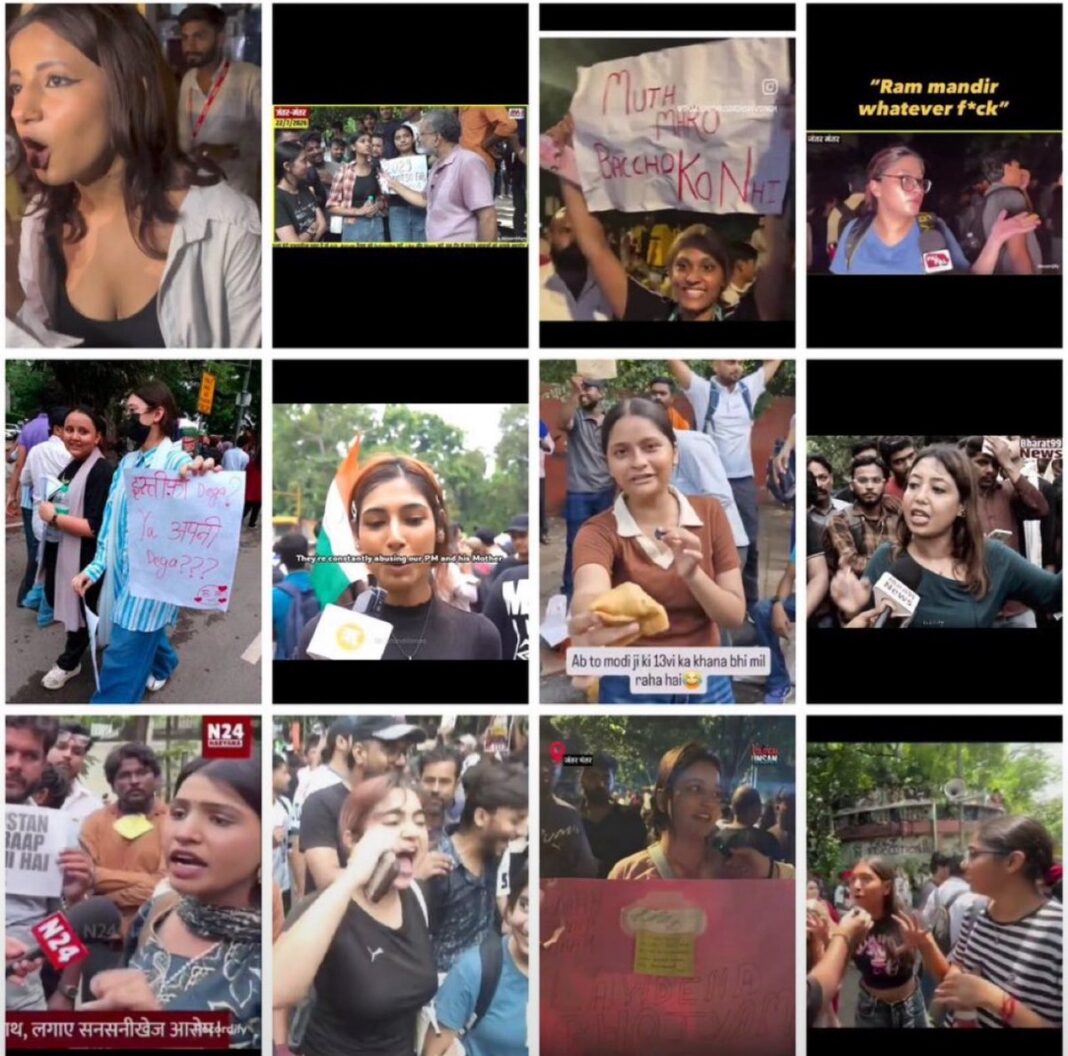
The recent CJP-linked protests offered a disturbing glimpse into this decline. Videos circulating from the demonstrations show a handful of young men and women hurling the vilest abuses at Prime Minister Narendra Modi. The language was not political criticism. It was not satire. It was not passionate disagreement. It was crude, obscene, and deeply offensive.
Let us be absolutely clear. In a democracy, you have every right to disagree with Narendra Modi. You can oppose his policies. You can campaign against the BJP. You can vote for another party. You can criticise every decision the government takes. That is the essence of democratic freedom.
But there is a vast difference between criticism and degradation.
When political discourse relies on abusive language, it loses its intellectual credibility and becomes a display of empty, thoughtless behavior. When your strongest argument is an expletive, you have already admitted that you have run out of reason.
Some believe that using abusive language makes them rebellious, fearless, or representative of a modern generation that refuses to conform. It does not. It merely reveals a disturbing emptiness where thought should have existed.
The most revealing aspect of these videos is not what they say about Narendra Modi. It is what they say about the individuals shouting those abuses. Their words reflect not political maturity but personal conditioning. The language that comes naturally to a person often mirrors the environment in which they have been raised and the standards they have accepted.
Parents spend years teaching children to speak respectfully, even when they disagree. Schools attempt to cultivate discipline and civil engagement. Society expects the next generation to improve the quality of public discourse, not drag it into the gutter. When young people publicly celebrate vulgar abuse as political expression, one cannot help but ask where those values were lost.
Freedom of speech was never meant to be freedom from responsibility.
Every generation has challenged authority. India’s freedom movement was led by young people. The movement against the Emergency drew enormous youth participation. Across history, students have stood up against injustice. But they did so by building arguments, organising movements, writing, debating, and persuading. Their legacy was built on conviction, not profanity.

Today, social media has unfortunately rewarded outrage over originality. The loudest voice often receives the most attention, regardless of whether it has anything meaningful to say. Viral clips encourage performative anger because algorithms reward shock value. In that environment, some young people confuse obscenity with authenticity and insults with courage. They mistake noise for influence.
Real courage is standing before someone whose politics you dislike and defeating their arguments with facts. Real confidence lies in presenting evidence that changes minds. Real leadership inspires people through ideas, not abuses.
Prime Minister Narendra Modi is not beyond criticism. No elected leader is. Democracies thrive when governments are questioned and held accountable. But criticism gains strength when it is rooted in facts, logic, and principles. It loses credibility the moment it is wrapped in vulgarity.
The tragedy is that the abusive slogans end up overshadowing legitimate concerns that protesters may have had. Public attention shifts from the issues being raised to the language being used. In the end, the cause suffers because the conduct becomes the headline.
Perhaps that is the greatest irony.
Those who believe they are leading a revolution often become the biggest obstacle to their own message. Instead of persuading the undecided, they alienate ordinary citizens who may have been willing to listen but refuse to endorse indecency.
The future of India belongs to its youth. That future demands thinkers, innovators, entrepreneurs, scientists, soldiers, artists, and responsible political leaders. It does not need a generation that mistakes abuse for activism.
Disagree with Modi if you wish. Challenge him if you believe he is wrong. Defeat him politically if you can convince the people. That is democracy.
But if all you can offer is vulgar abuse, you are not demonstrating the confidence of a new generation. You are displaying the mindless behaviour of someone who has surrendered independent thought.
Being young is about questioning the world. Being democratic is about respecting differences. Being civilised is about knowing where criticism ends and abuse begins.