

Key Takeaways
- SpaceX’s Falcon Heavy successfully launched the USSF-52 mission into orbit, marking the fifth launch and landing of the two-side boosters.
- The X-37B Orbital Test Vehicle is a US Air Force unmanned spaceplane that has been used for space domain awareness and experimentation with space technology.
- The USSF-52 mission aims to test and experiment with various space technologies, including space domain awareness and radiation effects on materials.
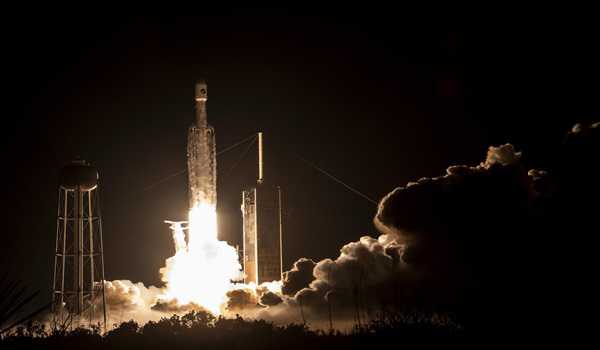
Washington: US space company SpaceX said Thursday that its Falcon Heavy spacecraft has successfully launched the USSF-52 mission into orbit from NASA’s Kennedy Space Center in Florida.
“On Thursday, December 28 at 8:07 p.m. ET [01:07 GMT on Friday], Falcon Heavy launched the USSF-52 mission to orbit from Launch Complex 39A (LC-39A) at Kennedy Space Center in Florida,” SpaceX said in a statement on the website.
The latest launch marked the fifth launch and landing of these Falcon Heavy two-side boosters, the company added.

The United States Space Force (USSF) said in late November that the US Department of the Air Force Rapid Capabilities Office, in partnership with USSF and SpaceX, was making final preparations to launch the seventh mission of the unmanned X-37B Orbital Test Vehicle, one of the most secretive projects of the US military, with “a wide range of test and experimentation objectives,” including “operating in new orbital regimes, experimenting with space domain awareness technologies and investigating the radiation effects to NASA materials.”
CNN reported on Thursday, following the launch, that it was unclear where exactly the “mysterious spacecraft” that would carry out cutting-edge research was going or how long it would stay in space.
Activities of the X-37B in space have long been the subject of fascination and speculation, the report said, adding that the spacecraft has been known to research concepts such as relaying solar energy from space for use back on Earth and studying the effects of radiation on seeds used to grow food.