


Key Takeaways
- The conflict between Israel and Hezbollah has escalated into a regional war threat, with the UN Security Council holding an emergency meeting to address the situation.
- France has proposed a 21-day ceasefire in Lebanon to allow for negotiations and prevent a full-scale war between Israel and Hezbollah.
- The situation in Lebanon is deteriorating, with a conflict between Israel and Hezbollah causing massive civilian displacement and repeated attacks on military targets and residential areas.
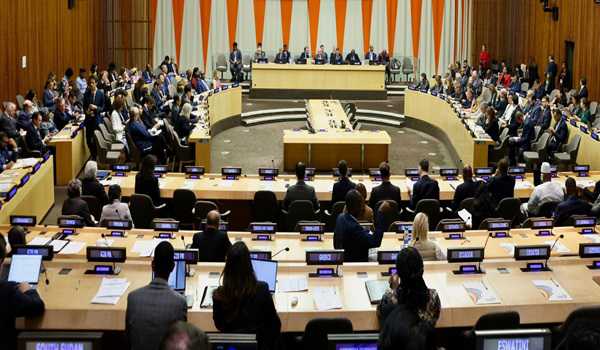
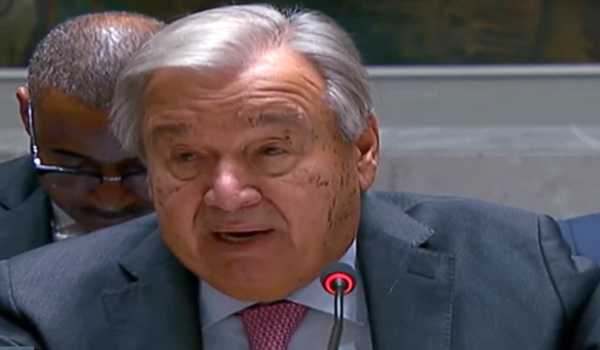
United Nations: Requested by France, the UN Security Council on Wednesday convened an emergency meeting on Lebanon, the second meeting on the country’s deteriorating situation in less than a week, with UN Secretary-General Antonio Guterres saying that “hell is breaking loose in Lebanon.”
In his remarks, Guterres urged the Security Council “to work in lock-step” to end the escalating violence between Israeli forces and Hezbollah militants across the Blue Line, a buffer zone in southern Lebanon.
Hezbollah and Israel must pull back from the brink of a potentially catastrophic regional war, he insisted. Massive civilian displacement has occurred from southern and eastern Lebanon towards the Lebanese capital of Beirut, with the Israelis enduring repeated attacks from Hezbollah and over 8,300 rockets, drones, and missile attacks on military targets and residential areas.
With an appeal for both sides to respect Lebanese sovereignty, Guterres said that Lebanon “must have full control of its weapons” throughout the country. “We support all efforts to strengthen the Lebanese Armed Forces,” he added.
“We say it very clearly and honestly: what we have been witnessing over the past year in Gaza and what we are witnessing now in Lebanon is likely to expand to other areas in the region if the international community does not shoulder its responsibility to put an end to the machine of death and destruction,” Badr Ahmed Mohamed Abdelatty, Minister for Foreign Affairs, Emigration and Egyptian Expatriates of Egypt, told the meeting.
“They are spreading terror and fear among Lebanese citizens … We cannot bear to lose another generation because of the war,” said Lebanese Prime Minister Najib Mikati.
“The ongoing aggression against Lebanon is fueled by the failure of the international community, and in particular by the UN Security Council, to hold Israel accountable for war crimes and genocide in Gaza,” said Seyyed Abbas Araghchi, Iranian foreign minister.

France on Wednesday unveiled a proposal for a 21-day ceasefire in Lebanon in UN diplomacy with the United States as the death toll mounted in deadly strikes by Israel. French Foreign Minister Jean-Noel Barrot said that the two Western powers were proposing a “temporary ceasefire” of 21 days “to allow for negotiations.”
The Arab League Council has at the level of foreign ministers warned of the repercussions of escalating “the Israeli aggression” against Lebanon in light of recent developments, which could lead to the outbreak of a large-scale regional war and threaten the security and stability of the entire region.
Israel said on Wednesday it was readying troops for a potential ground incursion into Lebanon, telling soldiers to prepare to “enter enemy territory” as it called up more reservists and sent world leaders scrambling to prevent a full-scale war with Hezbollah militants. “We are preparing the process of a maneuver,” Israeli Military Chief Herzi Halevi told troops at an exercise along the northern border.
Israeli warplanes resumed intensive airstrikes on eastern and southern Lebanon on Wednesday evening, carrying out about 70 raids on the areas of Baalbek, Hermel, and Western Bekaa in eastern Lebanon.
On Monday and Tuesday, Israel conducted its most extensive attacks on Lebanon since 2006, resulting in more than 550 deaths and over 1,800 injuries across the country. Lebanese Environment Minister Nasser Yassin said Israel’s bombardment has displaced over 150,000 residents over the past 72 hours.
The sharp escalation has raised concerns about a potential full-scale conflict between Israel and Lebanon, with fears that other regional powers could also be sucked in.