


Key Takeaways
- The US and India have a long-standing bilateral partnership, with the two countries working together on critical and emerging technologies, defense cooperation, energy, and on advancing a free and open Indo-Pacific region.
- The US Secretary of State Marco Rubio emphasized the Trump Administration’s desire to work with India to advance economic ties and address concerns related to irregular migration.
- The EAM Jaishankar and US Secy of State Marco Rubio reviewed the extensive US-India partnership during their first bilateral meeting.
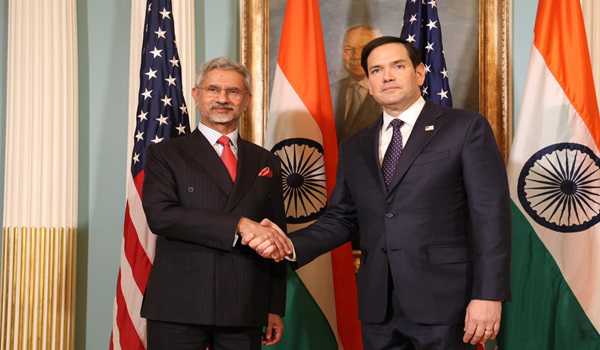
Washington/New Delhi: External Affairs Minister S Jaishankar held his first bilateral meeting with new US Secretary of State Marco Rubio under the Trump administration, during which the two sides reviewed the extensive bilateral partnership.
The EAM expressed his enthusiasm for working with the new US Secretary of State, saying: ‘I look forward to closely working with him to advance our strategic cooperation.’
“Delighted to meet @secrubio for his first bilateral meeting after assumption of office as Secretary of State.
“Reviewed our extensive bilateral partnership, of which @secrubio
has been a strong advocate.
“Also exchanged views on a wide range of regional and global issues.

“Look forward to closely working with him to advance our strategic cooperation.”
The new US State Department Spokesperson Tammy Bruce, in a readout of the meeting, said:
“Secretary of State Marco Rubio met with Indian External Affairs Minister Subrahmanyam Jaishankar today in Washington, D.C.
“Secretary Rubio and External Affairs Minister Jaishankar affirmed a shared commitment to continuing to strengthen the partnership between the United States and India.
“They discussed a wide range of topics, including regional issues and opportunities to further deepen the U.S.-India relationship, in particular on critical and emerging technologies, defense cooperation, energy, and on advancing a free and open Indo-Pacific region.
“Secretary Rubio also emphasized the Trump Administration’s desire to work with India to advance economic ties and address concerns related to irregular migration.”